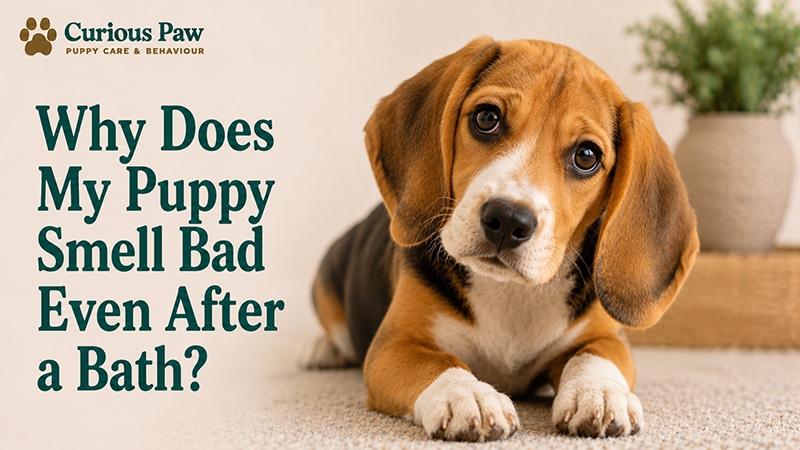
A bath removes smell from the coat. It doesn’t fix smell that’s coming from somewhere other than the coat. An ear infection smells the same before and after a bath. Anal gland odor smells the same before and after a bath. A skin yeast infection smells the same before and after a bath. If the smell returns within 24 hours of washing or was never actually resolved by the bath, the source is almost certainly medical rather than hygiene-related — and shampooing more frequently won’t help.
The Most Common Sources of Persistent Odor
Skin yeast infections produce a distinctive musty, sour, or corn-chip smell that’s hard to mistake once you’ve identified it. Yeast (Malassezia) is normally present on canine skin in small amounts, but it can overgrow when the skin environment is disrupted — usually by allergies, moisture, or hormonal changes. The paws are a common site: the “Frito feet” smell many owners notice and attribute to a quirky puppy thing is actually the yeast that colonizes the warm, moist skin between the toes. Allergies of the skin predispose dogs to yeast infections that have a very strong odor. The infection — not the dog — is what smells, and it requires antifungal treatment, not more bathing.
Ear infections can produce enough odor to be detectable at a distance. A yeasty, sweet, or foul smell concentrated around the head or ears that doesn’t resolve with bathing is often the ear rather than the coat. The smell comes from inside the ear canal where shampoo never reaches. Head shaking, scratching at the ears, or sensitivity when the ear area is touched alongside the smell points here clearly.
Anal glands are small sacs on either side of the anus that produce a distinctively foul, fishy-smelling secretion. Normally expressed during defecation, they can become impacted or infected, causing the secretion to accumulate and leak — producing an odor that no bath resolves because it comes from the glands themselves, not the coat. Impacted anal glands cause a smell like rotting fish that won’t go away with bathing. Scooting along the floor and licking at the base of the tail are accompanying signs. A vet or groomer can express the glands manually, and if they require frequent expression, the underlying cause is usually worth investigating — it’s often allergies.
Dental disease produces halitosis that owners sometimes mistake for body odor. The smell comes from the mouth — bacteria in plaque and tartar, gum inflammation, or in advanced cases infected tissue. A puppy shouldn’t have significant dental disease, but a chronically bad breath that’s distinct from normal “puppy breath” is worth noting at the next vet visit. Healthy puppy breath isn’t floral, but it also isn’t aggressively foul.
Bacterial skin infections produce a range of odors from musty to distinctly foul. They often develop secondary to allergic skin disease, where the scratching and compromised skin barrier allows bacteria to establish. Visible signs alongside the smell: redness, hot spots, pimple-like pustules, or crusting on the skin.
When Smell After a Bath Is Normal
The wet dog smell that appears immediately after a bath and fades within one to two hours as the coat dries is normal and unrelated to any health issue. It comes from microorganisms naturally present on the skin and coat releasing volatile compounds when water is added — essentially the same mechanism as wet wool or wet hair. It’s unpleasant but it’s physics, not pathology. A coat that’s fully dry and no longer smells is a clean dog. A coat that still smells after drying completely, or that starts smelling again within 24 to 48 hours, is a different situation.


The Role Bathing Actually Plays
Bathing too frequently strips protective oils from the skin and disrupts the microbiome, potentially making skin-based odor problems worse over time. A dog that’s bathed weekly because they “always smell” may have a condition that bathing is temporarily masking while allowing to persist and possibly worsen. The right response to a dog that smells immediately after a bath isn’t more frequent bathing — it’s identifying where the smell is actually coming from.
Incomplete rinsing leaves shampoo residue in the coat that smells as it dries. For long-coated breeds especially, the amount of rinse time required is significantly more than owners typically apply. When the coat smells like shampoo gone stale a few hours after a bath, residue is likely. Rinsing until the water runs completely clear and the coat feels neutral rather than slick resolves this.
When to Call the Vet
A smell that returns within 24 hours of a bath and isn’t attributable to the puppy rolling in something is almost always medical. A fishy smell concentrated near the rear, a sour or yeasty smell from the paws or skin folds, a foul odor from the ear area, or breath that’s aggressively unpleasant rather than just “dog breath” — any of these warrants a vet visit. These conditions are treatable, but treating the smell without treating the cause produces the same smell the following week.
The wet dog smell that disappears within two hours is normal. The smell that comes back the same day isn’t about hygiene — it’s a signal that something else is going on.