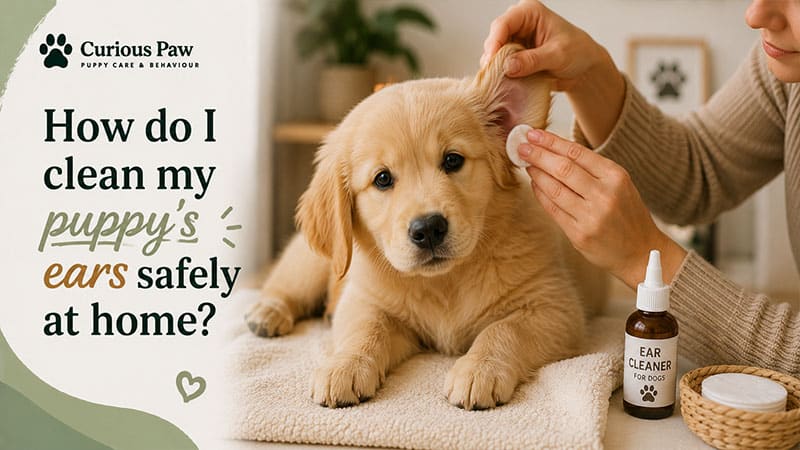
Most puppy ears don’t need regular cleaning. The ear canal is self-cleaning under normal conditions — the movement of the ear and natural wax migration carry debris outward without intervention. Over-cleaning is one of the most common ear care mistakes: it strips protective oils, disrupts the natural microbiome, and can cause the irritation it was meant to prevent. According to VCA Animal Hospitals, healthy ears typically don’t need to be cleaned more than once a month, and many dogs with healthy, upright ears that don’t swim regularly need cleaning even less frequently than that.
When Cleaning Is Appropriate
After water exposure — swimming, bathing, being caught in rain — moisture retained in the ear canal creates conditions for bacterial or yeast overgrowth. Cleaning after these events is one of the most practical preventive steps an owner can take. Floppy-eared breeds that restrict airflow across the canal (Cocker Spaniels, Basset Hounds, Labrador Retrievers) benefit from more regular cleaning than upright-eared breeds, simply because the warm, humid microenvironment under the ear flap favors microbial growth.
Otherwise: if the ear looks and smells normal, leave it alone. The ear that’s being cleaned regularly to “stay on top of it” when there’s no discharge, odor, or visible buildup is being cleaned unnecessarily. If in doubt about frequency, the vet can examine the ear at a wellness visit and give a specific recommendation for that dog’s ear anatomy, breed, and lifestyle.
What You Need
A veterinarian-approved ear cleaner designed specifically for dogs. Not hydrogen peroxide — VCA specifically notes that hydrogen peroxide can irritate healthy tissue in the ear canal. Not rubbing alcohol. Not water alone. Not human ear cleaning products. Dog ear cleaners are formulated with a pH appropriate for canine ear tissue and typically contain a drying agent that evaporates residual moisture after cleaning — which is specifically what prevents the post-cleaning moisture problem.


Cotton balls or gauze pads for the outer canal and ear flap. Cotton swabs are not safe for cleaning inside a dog’s ear canal — they can push debris deeper and potentially damage the eardrum. Their only appropriate use is for cleaning the visible folds of the outer ear, never inserted into the canal.
How to Do It
Have the puppy sitting or lying down in a comfortable position. Treats nearby and ready. Lift the ear flap to expose the canal opening. Apply enough ear cleaner to fill the visible canal — the bottle tip goes above the canal opening, not inside it. The goal is enough solution to flow into the canal, not a precise measurement. Most veterinarians recommend allowing the cleaner to drip in until you can see it pooling at the canal entrance.
Hold the ear flap down to close off the canal opening and massage the base of the ear firmly for 20 to 30 seconds. This is when you’ll hear a squishing sound as the cleaner moves through the horizontal portion of the L-shaped canal, loosening debris. The squishing sound is the cleaner working — it means the technique is right and the product is reaching the area that needs it. First-time owners often stop at this point thinking something is wrong. It’s not.
Release the ear flap and allow the puppy to shake its head — this brings loosened debris toward the canal opening. Wipe the outer canal and ear flap with a cotton ball or gauze, working from inside outward, removing what the shake brought up. Repeat with clean cotton until the cotton comes out clean. Do the second ear. Give treats throughout.
Insert cotton swabs into the ear canal · Use hydrogen peroxide, alcohol, or water as a cleaner · Insert anything deep into the canal · Clean aggressively if the puppy shows pain, significant discharge, or a bad smell — those indicate infection, and cleaning an infected ear without treatment doesn’t help and may spread the infection. A bad-smelling ear or one with significant discharge needs veterinary assessment before any home cleaning.
Breed Considerations
Dogs with hair growing inside the ear canal — Poodles, Shih Tzus, Bichons, some terriers — accumulate wax and debris faster than dogs without ear canal hair. Some groomers and vets recommend plucking this hair; others note that plucking creates micro-trauma that can increase infection risk. The current consensus leans toward leaving ear canal hair unless it’s so dense it’s trapping debris and impairing drainage. A vet can assess whether a specific dog’s ear canal hair needs management.
For puppies with floppy ears, cleaning after every bath and every water exposure is standard practice. The ear that stays dry is significantly less infection-prone than one that regularly holds moisture.
A healthy ear has no smell, no significant discharge, and a puppy that doesn’t resist ear handling or scratch at the ears. Any smell, dark or colored discharge, visible redness, pawing at the ear, head shaking, or a puppy that consistently resists ear touch is showing signs that warrant a vet call before home cleaning. Home cleaning is maintenance for healthy ears. Ears showing signs of infection need diagnosis and treatment, not cleaning alone.