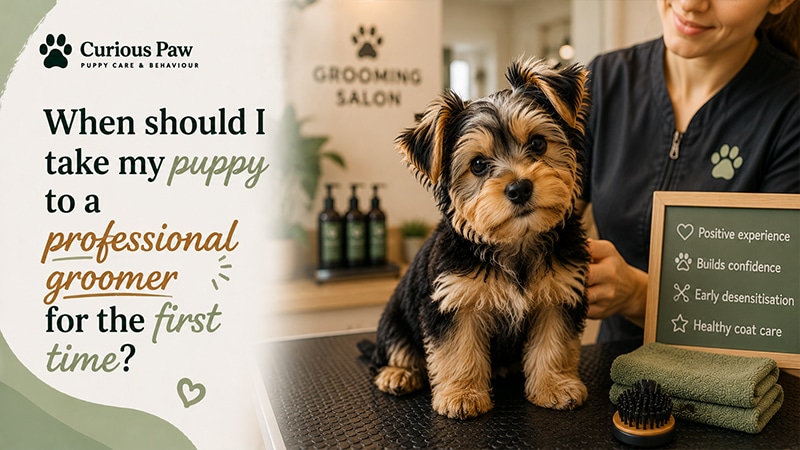
This question is more time-sensitive than most owners realize. The socialization window — when puppies form lasting associations with experiences most readily — closes around 16 weeks of age. According to PetMD’s grooming guide, the ability to easily form positive associations with new experiences decreases dramatically after four months. A puppy taken to the groomer for the first time at 6 months has missed the window when a positive experience would have had the most durable effect. The target: first professional grooming appointment around 12 to 14 weeks, once the puppy has had its core vaccinations but is still within the most receptive socialization period.
The Timing Logic
Two things need to be in place before the first professional grooming appointment: the vaccination series underway and the puppy handled enough at home that the grooming environment isn’t the puppy’s first experience of being touched all over. The vaccination requirement isn’t absolute for the very first appointment — most groomers require at least the first round of core vaccines, and some require the full series. Calling ahead to confirm what the specific salon requires is the first step.
The handling preparation is equally important but belongs entirely to the owner. A puppy that has never had its paws touched, ears handled, or been on an elevated surface will find the grooming table, the dryer, and the restraint of the grooming process alarming. The investment in daily handling at home from weeks 8 to 12 — described in the grooming desensitization article — is what the first professional appointment builds on.
Long-Coated and Curly-Coated Breeds: Earlier Is Better
For Poodles, Doodles, Bichons, Shih Tzus, Maltese, Yorkies, and other long or curly-coated breeds, professional grooming needs to start earlier rather than later. These coats can mat significantly by 12 to 16 weeks if not maintained, and a matted first appointment is a more difficult and stressful introduction than a clean one. Breeders and groomers of these breeds typically recommend the first appointment by 10 to 12 weeks. PetMD specifically notes that long-haired and curly-haired breeds may need professional grooming earlier than other puppies to prevent matting.


What the First Appointment Should Look Like
The first appointment should not be a full groom. It should be a short, positive introduction: a bath, a gentle brush-out, nail trim, and ear cleaning. No dramatic haircut, no extended drying, no unnecessary time under restraint. Many groomers offer a “puppy’s first groom” or “puppy introduction” package specifically designed for this — shorter, lower-stress, focused on positive experience rather than complete service. An appointment that ends before the puppy has become distressed is a successful first appointment, even if it isn’t comprehensive.
The groomer table is often the first elevated surface a puppy has been asked to stand on for an extended period. Lifting the puppy onto a counter or table at home occasionally in the weeks before the appointment removes that as a source of alarm. The dryer is usually the hardest element — introducing the sound of a hair dryer at home, at a distance, with treats, before the appointment helps. Small preparations make a significant difference to the outcome.
The Goodbye That Matters
How the owner handles the drop-off shapes the puppy’s emotional reading of the situation. An owner who makes the farewell prolonged and emotionally charged — who speaks to the puppy in an anxious voice, gives repeated reassurances, and reluctantly leaves — communicates to the puppy that this is a situation to be anxious about. The puppy reads the owner’s emotional state as information. A cheerful, brief, matter-of-fact goodbye — introduce the puppy to the groomer warmly, hand over the leash, say “you’re going to love it, see you in a bit” and walk out — models the emotional register that the puppy should have. It takes ten seconds and sets up the appointment better than any amount of pre-appointment preparation.
Choosing the Right Groomer
Not all groomers are experienced with puppies, and the first appointment with an inexperienced or impatient groomer can create lasting negative associations that take months to undo. When looking for a first groomer: ask explicitly if they take puppies and what their approach is for a first visit. A groomer who describes a gentle, low-pressure introduction focused on the puppy’s comfort is a different operation from one who implies the puppy will simply need to get through it. Ask if you can tour the facility before booking. A salon that won’t allow a brief look around before a first puppy appointment is providing less transparency than one that welcomes it.
Groomers are unregulated in most states — no certification is legally required to operate. Word of mouth from other dog owners in the same breed community or from the puppy’s vet is a more reliable starting point than online reviews alone. A groomer who asks about the puppy’s temperament and previous handling experience before the appointment is showing the professional approach that makes first appointments successful.
Before the first appointment, tell the groomer: the puppy’s age and any handling it has or hasn’t been exposed to, any body areas that are still sensitive or that the puppy resists, what vaccinations have been completed, and that this is a first appointment and a short, positive experience matters more than a complete service. A groomer who responds well to that information is the right groomer for the job.