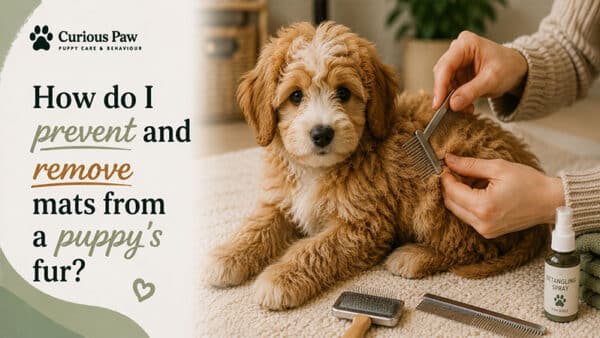
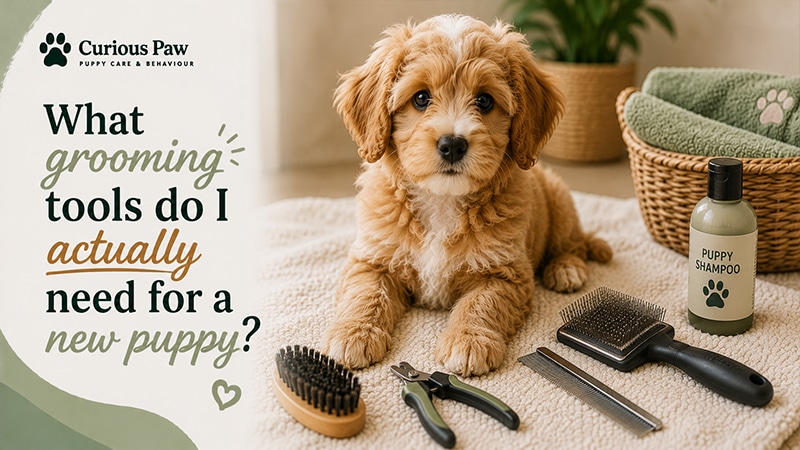
Most new puppy owners buy considerably more grooming equipment than they need. The pet store display of grooming tools is extensive; what a puppy actually requires is considerably shorter. Five items cover the genuine grooming needs of almost every puppy in the first year. A sixth is highly recommended. Everything else is breed-specific, optional, or something to add later when the adult coat has developed and the actual needs are clearer.
The Actual Essentials
A soft brush appropriate for the coat type. For puppies under 6 months, this means the softest option in the appropriate category — a soft slicker brush, a pin brush with rounded tips, or a rubber curry brush for short-coated breeds. Puppy skin and puppy coat are more sensitive than adult skin and adult coat. The gentle version of the right brush type is the right starting tool, with firmer options added as the adult coat develops. The specific type of brush depends on coat type, covered in detail in the brush guide article. This is the single most used grooming tool for almost any puppy.
A metal comb. Not a plastic comb. The fine teeth of a metal grooming comb catch tangles that a brush passes over and are essential for checking that the brush truly went all the way through the coat rather than gliding over the surface. For long and curly coats, a comb run through the coat after brushing is the quality check that catches mat formation before it becomes mat removal. A simple metal greyhound comb — fine-toothed at one end, medium-toothed at the other — covers nearly all combing needs and costs under $15.
Nail clippers. Scissor-style clippers with two crossing blades, appropriately sized for the puppy’s current nail thickness. The nail clippers purchased at the start will likely be too small for a large-breed puppy by 6 months — a medium pair initially and a larger pair for the adult is a reasonable plan. Sharp blades matter more than brand; dull clippers crush the nail rather than cut it cleanly, which causes discomfort independent of the quick. Many owners find small or medium-breed clippers adequate for medium-sized puppies too; go by nail thickness, not body size.
Styptic powder. Everyone buys nail clippers. Almost nobody buys styptic powder at the same time. The first time the quick is nicked — which happens even to experienced owners and professional groomers — the owner who doesn’t have styptic powder is improvising with flour and trying to calm a startled puppy simultaneously. A small container of styptic powder costs around $5 and should be purchased with the clippers. It stops bleeding from a nicked quick within 30 seconds. Cornstarch or flour work as backups but styptic powder works faster and more reliably.
A puppy-specific shampoo. Human shampoo and adult dog shampoo are both too harsh for puppy skin and can cause dryness and irritation after even one use. A gentle puppy shampoo — oatmeal-based formulas are commonly recommended for sensitive skin — is worth having before the first bath, not after the first bath when the irritation has already happened. The shampoo used in the first few baths helps shape the puppy’s association with bathing, making the gentlest available option worth the slight additional cost over a standard product.
A dog toothbrush and dog toothpaste. Technically grooming, technically separate from the tools above, but important enough that it belongs in the foundational kit. The window to establish tooth brushing tolerance is when the adult teeth first arrive around 5 to 6 months — not 3 years when dental disease is already present. A finger brush or small-headed toothbrush and enzymatic dog toothpaste (not human toothpaste — fluoride and xylitol are both toxic to dogs) are the two components. Buying them in the first weeks allows gradual introduction during the puppy’s most receptive period.
What to Skip Initially
Deshedding tools (Furminator-style blades and rakes) are too harsh for puppy coats and puppy skin. Add them when the adult double coat has fully developed. Detangling sprays are useful but not essential until the puppy coat has developed enough length to tangle — typically around 4 to 6 months for longer-coated breeds. Professional-grade clippers for haircuts at home have a learning curve and are a significant expense; unless the owner is committed to home haircuts, professional grooming appointments are a better investment for most coat types. Ear cleaning solution is worth having for breeds prone to ear infections or that swim regularly, but most healthy upright-eared breeds can wait on this.


What to Add as the Puppy Grows
Around 6 months, when the adult coat begins establishing itself: a firmer slicker brush if the soft one has been the main tool; detangling spray for longer coats; a dematting comb if the coat type warrants it (Poodles, Doodles, long-haired breeds). Around 12 months for double-coated breeds: a deshedding rake or blade appropriate for the specific undercoat type. Throughout the first year: whatever the groomer recommends at each professional appointment, which is the most tailored advice available for the specific coat and the owner’s grooming capabilities.
The five items listed above, purchased before the puppy comes home, handle the grooming reality of the first several months for almost any coat type. The breed-specific specialization comes once the adult coat has arrived and the actual needs are visible.