
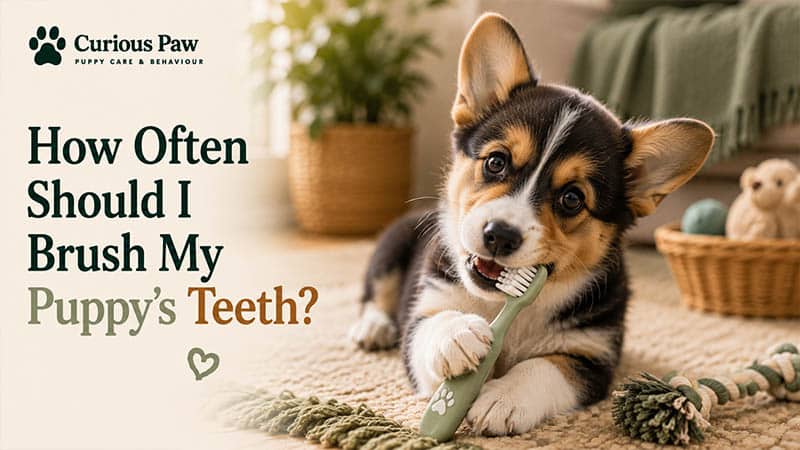
Over 80 percent of dogs have some degree of dental disease by the time they’re 3 years old, according to VCA Animal Hospitals and PetMD. It’s the most common health condition affecting dogs, it’s largely preventable, and the window to prevent it opens when the adult teeth first appear at around 5 to 6 months. Daily tooth brushing is the single most effective thing an owner can do for a dog’s long-term oral health — not because it’s pleasant, but because the biology of plaque formation leaves very little margin for less frequent approaches.
Why Frequency Matters More Than People Realize
Plaque forms on tooth surfaces within six hours of a cleaning. According to VCA’s dental guidance, it begins mineralizing into tartar — the hard calcified deposit that causes gum inflammation and bone loss — in as little as 24 to 72 hours. Once plaque has hardened into tartar, a toothbrush cannot remove it. Only a professional veterinary cleaning under anesthesia can address tartar once it’s established.
This timeline is why the recommendation isn’t “brush sometimes.” According to the AVDC (American Veterinary Dental College), daily brushing is the gold standard for preventing plaque accumulation. Three times per week is the minimum VCA recommends for meaningful plaque management. The gap between daily brushing and three-times-weekly brushing is the window where plaque turns into tartar on the surfaces being skipped. A dog brushed every three or four days is perpetually playing catch-up with the mineralization timeline.
When to Start
The best time to start brushing is when the adult teeth first appear — around 5 to 6 months. A puppy introduced to tooth brushing gradually and positively during this window is significantly more tolerant as an adult than one that first encounters a toothbrush at age 5. The baby teeth themselves don’t need the same diligence because they’re temporary, but the introduction process — getting the puppy comfortable with the equipment, the mouth handling, and the routine — absolutely begins during puppyhood.


Starting with the baby teeth is fine. Handling the mouth gently, letting the puppy taste the toothpaste, touching the gums — these build tolerance for the sensations. By the time the adult teeth are in, the routine is already familiar.
How to Do It
Use a toothbrush designed for dogs — a finger brush works well for small breeds or puppies new to brushing, and angled dog toothbrushes reach the back teeth more effectively than human brushes. Never use human toothpaste; it contains fluoride and xylitol, both toxic to dogs. Dog toothpaste comes in poultry, beef, peanut butter, and other flavors designed to make the experience rewarding rather than something to endure.
The technique: focus on the outer surfaces of the back upper teeth, where plaque accumulates fastest. Gentle circular motions along the gumline, where the tooth meets the tissue. The inner surfaces matter too but are harder to access and naturally cleaned somewhat by the tongue. According to the AVDC, the mechanical action of the brush removing plaque is what matters most — the toothpaste assists but isn’t the primary mechanism. Brushing with water and no toothpaste is better than not brushing.
Keep sessions short initially — 15 to 30 seconds while the puppy is being acclimated. Build to two to three minutes as tolerance increases. Always end with something the puppy enjoys. The association being built is “mouth handling ends in something good,” and that association determines whether an adult dog accepts brushing as part of routine or turns it into a two-person struggle.
Supplementary Tools
Dental chews, water additives, and rinses approved by the Veterinary Oral Health Council (VOHC) are legitimate supplementary tools — meaning they reduce plaque accumulation and slow tartar formation when used consistently. They don’t replace brushing. The VOHC seal indicates the product has been evaluated for efficacy; a dental chew without it may do nothing beyond satisfying the chewing drive.
Some owners try dental chews as a substitute when brushing isn’t happening. That’s better than nothing, but the gap in efficacy is significant. A chew removes some surface plaque mechanically by abrasion, but it doesn’t reach the gumline or the crevices between teeth where periodontal disease originates. It doesn’t replicate what a brush does.
Human toothpaste — contains fluoride and xylitol, both toxic to dogs.
Elk antlers and hard bones — cause tooth fractures frequently enough that veterinary dentists specifically name them; fractured teeth usually require extraction.
Anesthesia-free dental cleaning — not recommended by the AVMA, AVDC, or ACVAA. Scraping visible tartar without the ability to examine below the gumline or take X-rays addresses cosmetics while leaving the disease progression untouched. It also causes enamel scratches that accelerate tartar formation.
Professional Cleaning
Daily at-home brushing significantly slows the development of dental disease but doesn’t eliminate the need for professional dental cleanings. VCA recommends annual dental exams and cleanings for most dogs; some breeds predisposed to periodontal disease — Bulldogs, Yorkshire Terriers, Dachshunds, and other small or brachycephalic breeds — may need them every six months. Professional cleaning under anesthesia is what removes tartar below the gumline, probes for pockets, takes dental X-rays, and addresses disease that home brushing can’t reach.
Owners who brush consistently tend to need less frequent professional intervention — that’s the direct payoff of the daily routine. Building that habit during the first year of the puppy’s life, when the adult teeth are new and there’s nothing to reverse yet, is significantly more effective than trying to build it at 3 years old when disease is already present.
- VCA Animal Hospitals — Brushing Your Dog’s Teeth
- PetMD — How to Brush Your Puppy’s Teeth
- American Veterinary Medical Association — Pet Dental Care