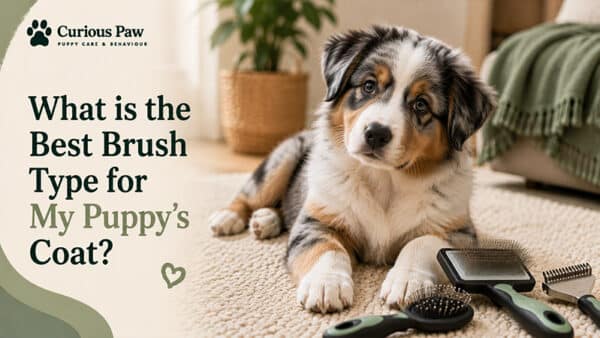
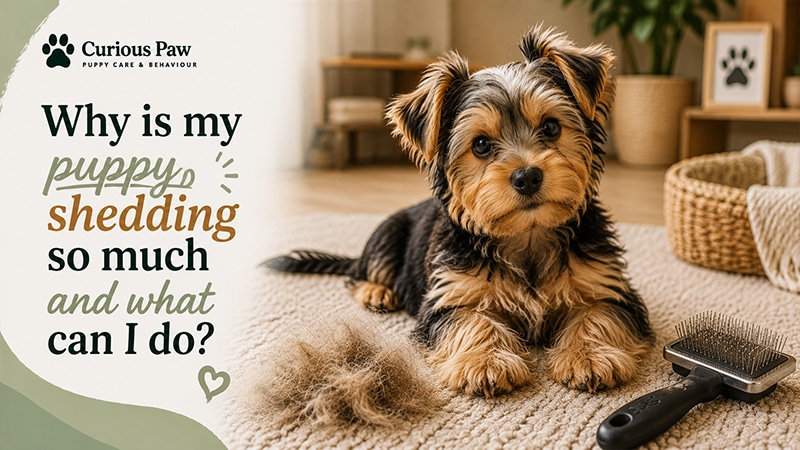
Shedding in puppies follows a predictable pattern that catches many owners off guard, particularly owners of long-coated breeds. Between roughly 4 and 6 months, puppies shed their soft puppy coat as the adult coat grows in. In some breeds this is gradual and barely noticeable. In others — Pomeranians, Chow Chows, Collies, Samoyeds — it’s dramatic enough that groomers and breeders have a name for it: “the uglies.” For several weeks or months, the coat looks patchy, ruffled, and uneven as the puppy coat sheds unevenly and the adult coat arrives at different rates in different areas. It’s temporary, it’s normal, and it’s not a sign of anything wrong with the puppy or the diet.
What’s Normal
A puppy that’s shedding heavily through the coat transition period is doing exactly what puppies do. The adult coat is denser, coarser, and different in texture from the puppy coat — the body has to lose the old before the new can establish itself. According to the AKC’s chief veterinarian Dr. Jerry Klein, this transition is normal and the amount of shedding during it doesn’t predict adult shedding levels. Some puppies that barely shed through the transition become heavy adult shedders; others that shed significantly settle into moderate adult shedding once the coat is established.
Seasonal shedding — heavier in spring when the winter undercoat is released, and sometimes again in fall — is also normal throughout the dog’s life. Indoor dogs with consistent artificial lighting and temperature may shed more evenly year-round rather than in concentrated seasonal bursts. This isn’t a health issue; it’s a response to environmental light cues that are less distinct indoors.
The Short-Hair Paradox
Many owners assume that long-haired breeds shed more than short-haired ones. The AKC specifically notes that this is often wrong. Short-haired dogs like Labrador Retrievers frequently have denser coats than many long-haired breeds and shed more total volume of hair — they just shed shorter hairs that are less visually dramatic on the couch and clothing. The Labrador Retriever is among the heaviest-shedding breeds by volume. The Afghan Hound, with its long flowing coat, sheds minimally. Breed is the predictor of shedding, not coat length.

What Actually Reduces Shedding
Regular brushing is the most effective tool available, and it works by removing loose hair from the coat before it falls on the floor and furniture. It doesn’t reduce the total amount of hair the dog sheds — that’s biologically determined — but it concentrates the shed hair in the brush and the trash rather than distributing it throughout the house. During the puppy coat transition and during seasonal blowout periods, daily or every-other-day brushing makes a visible difference to household hair levels.
Nutrition affects coat quality. A complete and balanced commercial puppy food with adequate protein and essential fatty acids supports healthy hair follicles and reduces the proportion of hair shed due to nutritional compromise versus natural cycling. Omega-3 fatty acids in particular — from fish oil supplements or fish-based puppy food — support skin and coat health. A dull, dry, or brittle coat alongside above-average shedding is worth investigating nutritionally and with a vet, though most puppies on quality commercial food are getting adequate nutrition.
Bathing loosens and removes dead coat effectively, particularly with a deshedding shampoo or conditioner during seasonal coat transitions. One bath during heavy shedding, followed immediately by thorough blow-drying and brushing, can remove more loose coat in an hour than a week of daily brushing. The timing: when shedding is visibly at its peak, not as a weekly routine. Frequent bathing strips protective oils and can worsen coat condition if overdone.
Deshedding tools (rake-style or blade-style) are appropriate for adult double-coated breeds during shedding season — not for puppies under 6 months, where the skin is still soft and sensitive. Once the adult coat is established, these tools are dramatically effective at reducing the volume of shed hair during coat blowout periods.
When Shedding Is a Medical Signal
Shedding is a problem when it produces bald patches rather than general thinning, when the skin beneath shed areas is red, crusty, or inflamed, or when it’s accompanied by excessive scratching, licking, or biting at the coat. These presentations suggest something other than normal shedding: mange (demodectic or sarcoptic), ringworm, allergic skin disease, thyroid issues, or bacterial skin infections. Normal shedding produces a generally thinner coat without visible skin changes. When bare skin appears beneath the shedding, something else is happening.
Stress shedding is real and observable — a puppy that’s anxious, recently moved, or experiencing significant change may shed noticeably more than its baseline. This is a physiological stress response. It resolves as the puppy adjusts and the stress level normalizes.
Shedding can be managed and reduced — through consistent brushing, seasonal bathing, and appropriate tools for the coat type. It cannot be eliminated in breeds that shed. The amount of hair a dog sheds is largely determined by genetics. What the owner controls is how much of it ends up in the house versus in the brush.