
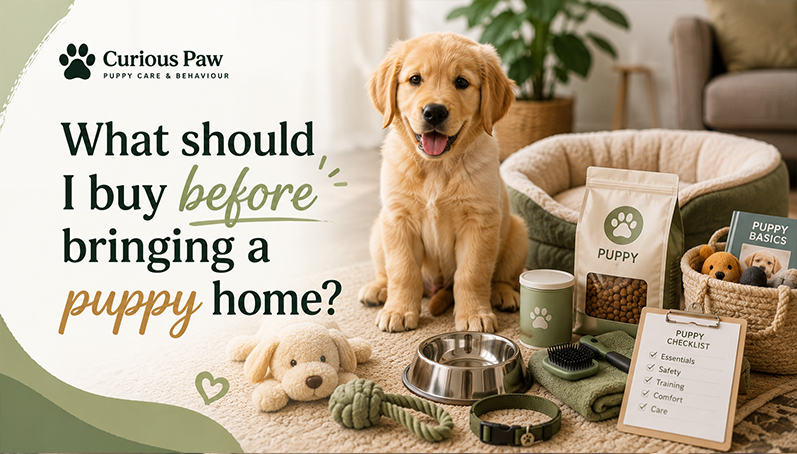
Walk into any pet store a week before your puppy comes home and you’ll leave with a cart full of things you don’t need and — usually — without the one or two things that would’ve actually helped. It happens to almost everyone. The displays are designed that way. The good news is the real list is short, and most of it is practical rather than cute.
What follows is based on what genuinely matters in the first week — not the full wishlist you’ll build over months of owning a dog, but the stuff that needs to be in your house before the puppy arrives.
Start With the Crate — and Get the Size Right
A crate is probably the single most impactful purchase you’ll make for a new puppy. Not because dogs love being confined — they don’t, not at first — but because it makes housetraining dramatically easier and gives the puppy a space that eventually feels genuinely safe. The AKC consistently recommends crate training as one of the most effective tools for new puppy owners, and any trainer who’s worked with a lot of dogs will tell you the same thing.
The size issue trips up a lot of first-time owners. The instinct is to buy big — get a crate that fits the adult dog so you only buy once. Completely understandable, and completely counterproductive. A puppy with too much crate space will use one end as a bathroom and sleep at the other, which destroys the whole mechanism that makes housetraining work. Dogs avoid soiling where they sleep, but only when the space is the right size.
The rule: the crate should let your puppy stand up, turn around, and lie down comfortably — nothing more. For large breeds, the practical solution is an adult-sized crate with a divider panel. You adjust the divider as the puppy grows rather than buying multiple crates. For small breeds, a single correctly sized crate usually works through puppyhood.
One thing most guides skip: put the crate in your bedroom for the first few weeks, not a separate room. The puppy’s entire world just changed overnight. Being near you at night — even just being able to smell you — reduces crying significantly. You can move it gradually once they’re settled and sleeping through.
Food, Bowls, and the Transition Problem
Before you buy any food at all, find out what the breeder or rescue has been feeding. Then buy that, at least for the first week or two. Stomach upset from a sudden food switch on top of the stress of a new home is genuinely common and genuinely unpleasant — for you and for the puppy. If you want to change to a different brand, do it gradually over about 10 days by mixing increasing amounts of the new food into the old.


Puppies eat three to four times a day — not twice like adult dogs. Their stomachs are small, blood sugar drops faster, and meals spread through the day make housetraining much more predictable. Free-feeding (leaving food available all day) sounds convenient but makes it nearly impossible to predict when they’ll need to go outside, which means more accidents.
For bowls, stainless steel is the practical choice. Plastic bowls develop micro-scratches over time that hold bacteria and are harder to actually clean. Two stainless bowls — one food, one water — is all you need. Skip the matching ceramic set with the puppy’s name on it until you know they’re not going to flip it repeatedly across the kitchen floor.
The One Thing Most People Forget
Enzymatic cleaner. Buy it before the puppy comes home. Not a general floor spray, not a multi-surface cleaner — enzymatic cleaner specifically, because regular cleaners don’t break down the proteins in urine at the source. They just mask the smell for human noses. The puppy’s nose is considerably better than yours, and a spot that smells like “nothing” to you may still read as “bathroom” to them — which is exactly why dogs repeatedly go back to the same corner after an accident that was “cleaned up.”
Nature’s Miracle is the brand most trainers point to. It’s widely available and it works. Buy the large bottle — you’ll go through more of it than you expect in the first few weeks. Also grab extra paper towels while you’re at it. And then buy more paper towels. Seriously.
Using ammonia-based cleaners on accident spots. Ammonia chemically resembles urine, which can actually reinforce the spot as a bathroom location rather than neutralize it. Always use an enzymatic cleaner on anything the puppy has urinated on — including carpet padding if it soaked through.
Collar, Leash, ID Tag
A flat collar that fits properly — two fingers between collar and neck, no more — plus a 4–6 foot standard leash. That’s the walking setup for a new puppy. Skip retractable leashes during training. They give inconsistent feedback, reward pulling by allowing forward movement, and the cord tension teaches a puppy that a tight leash is normal. It’s one of those things that feels convenient and creates months of problems.
The ID tag is the one that often gets delayed. People mean to order it before the puppy arrives and then don’t, and the first time the front door opens accidentally they wish they had. Get the tag made before pickup. Most pet stores do it in-store in under 10 minutes. Your phone number on the front. That’s all it needs.
For larger or stronger breeds, or any puppy that immediately starts pulling hard, a front-clip harness is worth adding. It redirects pulling without putting pressure on the trachea the way a collar does when a puppy is lunging repeatedly. That said — see how your puppy actually walks before buying specialty gear. Some puppies walk calmly on a collar from day one.
Limit Their World First
One or two baby gates before the puppy arrives. Not to be cruel — to be practical. A puppy with access to an entire house has more room to have accidents in places you won’t find for days, more opportunity to chew things that matter, and more space to get overwhelmed. Dogs that are given too much freedom too early in training tend to take longer to housetrain, not shorter.
Start with the kitchen or living room and expand access gradually as they earn it. It sounds restrictive written out like that, but in practice it just means keeping an eye on them in a manageable space rather than chasing them around the whole house.
While you’re setting up gates, do the thing most new owners skip: get on your hands and knees and look at your space from puppy height. Electrical cords, toxic houseplants (pothos, aloe, sago palm are common household culprits), medications on low surfaces, trash cans without lids — these are the things that generate emergency vet calls in the first month. The ASPCA has a full toxic plant list worth bookmarking.
Toys — Less Than You Think
The toy aisle is where first-time owners reliably overspend. It’s fun to buy toys. Puppies look excited about everything for about 30 seconds. The reality is that many puppies completely ignore the expensive puzzle toys bought in anticipation and will spend 20 minutes playing with a bottle cap they found under the couch.
Start with three things: a rope toy, a rubber chew toy (a Kong is the standard — it’s durable, it’s stuffable, and most puppies actually use it), and one soft plush toy for snuggling. See what your specific puppy gravitates toward before buying more. A frozen Kong stuffed with a little xylitol-free peanut butter or wet food is one of the most genuinely useful tools in the first few months — it buys you 20–30 minutes of quiet occupied puppy time when you need it.
Avoid rawhide while they’re young. It can break off in large pieces and cause choking or intestinal blockages. Bully sticks and rubber chews are better options, and always supervised with anything chewable at this age.
Grooming Basics — Start Early, Even If You Do Nothing
The goal in the first weeks isn’t grooming — it’s getting the puppy used to being handled. Puppies that learn early to tolerate having their paws touched, ears examined, and mouths opened are significantly easier to groom and examine at the vet as adults. Puppies that only get these things done when necessary grow into dogs that make nail trims a two-person operation.
A soft brush suited to their coat type, dog-safe nail clippers, puppy toothbrush and dog-safe toothpaste (never human toothpaste — fluoride and xylitol are both toxic to dogs), and a gentle puppy shampoo covers what you need. You don’t need to use all of it immediately. Just having it and introducing the puppy to the tools early builds the habit.
What Most Owners Regret Buying
A few things that show up in almost every “what I wish I’d known” conversation with new puppy owners:
- Elaborate dog beds before week two. Puppies chew bedding. An expensive orthopedic bed bought before you understand the puppy’s chewing habits often becomes stuffing on the floor within days. A washable crate mat to start — upgrade once you know what you’re dealing with.
- Too many toys at once. Fifteen toys doesn’t mean fifteen times the entertainment. It usually means the puppy cycles through them in 10 minutes and ignores them all. Rotate a small selection.
- A full grooming kit for a breed they hadn’t researched. Grooming needs vary enormously by coat type. A slicker brush appropriate for a Goldendoodle is useless on a Beagle. Know your breed before buying a grooming setup.
- Puppy pads in multiple rooms. Pads are a useful tool in specific situations — overnight, apartments, limited mobility. But scattering them around the house accidentally teaches puppies that going inside is generally fine, not just on the pad.
Book the Vet Before Pickup
This isn’t a purchase, but it belongs on the before-day-one list. Most vets recommend a checkup within the first 3–5 days of bringing a puppy home. According to PetMD, puppies should be seen every 3–4 weeks in their first months for vaccinations alone — and that first visit establishes the schedule, checks for anything the breeder missed, screens for parasites, and gives you a vet relationship before something urgent happens at 11pm on a Saturday.
If you’re going to get pet insurance, before the first vet visit is when to enroll. Pre-existing conditions are excluded from most policies, and anything documented at that first visit could count. It’s not an emergency to figure out, but it’s worth thinking about before rather than after.
A Few Questions Worth Answering
The actual essentials — crate, food, bowls, collar, leash, ID tag, enzymatic cleaner, and a few toys — typically runs $150–$300 before the first vet visit. It’s easy to double that or more if you buy premium versions of everything before you know what you need. The basics work fine, and you’ll have a much clearer picture of what’s worth upgrading after the first month.
Not necessarily. They’re genuinely useful in apartments, for overnight hours when outdoor trips aren’t practical, or for owners with limited mobility. The trade-off is that using them widely can slow outdoor training — you’re teaching a puppy two sets of rules rather than one. If outdoor housetraining is your goal from the start, most trainers recommend going straight to outdoor-only and skipping pads except where there’s a specific practical reason for them.
A flat collar is fine to start for most puppies. A front-clip harness becomes worthwhile for larger breeds or strong pullers — it redirects pulling without putting pressure on the trachea. Avoid back-clip harnesses for training; they actually make pulling more comfortable. Wait and see how your puppy walks before investing in specialty gear.
Ask before pickup — this information matters enough to be worth a phone call. If you genuinely can’t find out, choose a puppy food with an AAFCO “complete and balanced for growth” statement on the label. Large breeds need large-breed-specific formula. Run your final choice by your vet at the first visit and adjust from there.
Enzymatic cleaner, consistently. It’s the item that seems optional until you have a puppy in the house, and then it becomes clear immediately why you needed it on day one. The second most common answer is baby gates — new owners underestimate how much easier a small supervised space makes the first few weeks.
The list really does come down to a short set of things. Crate sized correctly. Same food the puppy already knows. Enzymatic cleaner before anything goes wrong. A collar with an ID tag that exists before the puppy steps outside. Everything else you can figure out once you know your specific dog — and you’ll know a lot more about what they actually need after the first week than any checklist can predict.
- American Kennel Club — New Puppy Checklist: Gear You’ll Need
- American Kennel Club — Preparing for a New Puppy
- PetMD — New Puppy Checklist: Essentials for Your New Dog
- Dogster — New Puppy Checklist: 23 Vet-Approved Supplies
- Rover — The New Puppy Checklist: Essential Gear, Toys & Services