
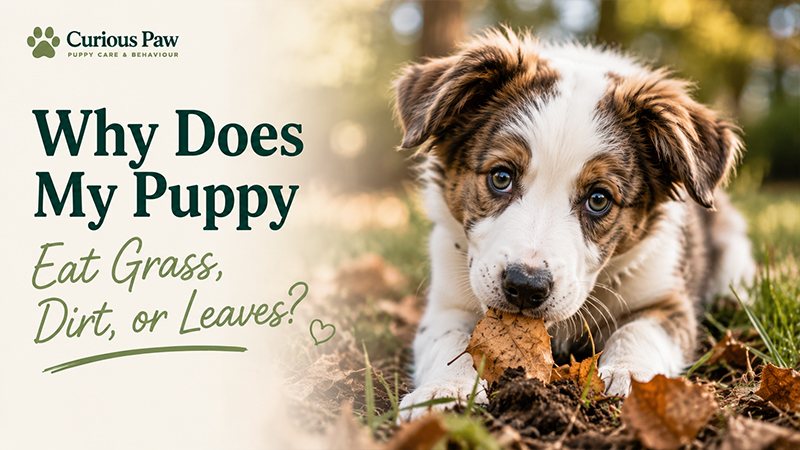
The question lumps three different behaviors together, and separating them is the first useful thing to do. A puppy that occasionally grazes on grass is almost certainly doing something normal. A puppy that eats large quantities of dirt with urgency is doing something worth investigating. A puppy picking up and chewing leaves is mostly just mouthing the world, which is what puppies do to everything. Treating them as the same problem leads either to unnecessary worry or to missed signals depending on which one you’re actually dealing with.
Grass: Usually Less Concerning Than It Looks
The persistent belief that dogs eat grass to make themselves vomit has more cultural weight than scientific support. According to PetMD, research shows that the vast majority of dogs that eat grass don’t vomit afterward, and most don’t appear ill before eating it. For most puppies most of the time, grass eating is curiosity, taste preference, opportunistic plant consumption, or simply the result of a mouth-first approach to investigating the outdoors. It’s been observed in wild canids too — eating plant material is a normal part of the species’ behavioral repertoire, not a signal that something is wrong.
The version worth paying attention to is specific: a puppy that heads outside first thing in the morning and frantically gobbles grass before vomiting yellow foam. The yellow foam is bile — the stomach has been empty overnight and is producing acid without food to buffer it. The puppy is seeking grass to trigger vomiting and relieve the irritation. This pattern is recognizable once you’ve seen it because of how purposeful it looks compared to ordinary grazing — the puppy is on a mission, not browsing. According to the AKC’s Chief Veterinary Officer, Dr. Jerry Klein, yellow foam usually indicates an empty stomach and the frantic eating is the dog’s response to the discomfort. A late-evening snack or a small meal before bed often resolves this completely.
The real practical concern with grass isn’t the behavior — it’s what might be on or in it. Pesticides, herbicides, and fertilizers applied to lawns are absorbed into the blades and can cause toxicity in puppies that eat treated grass. If you don’t know whether a lawn has been treated, assume it has. Your own yard is the one you control.
Dirt: More Causes, More Worth Investigating
Dirt eating has a wider range of causes than grass eating, and more of them point to something worth addressing. Soil contains minerals — iron, calcium, sodium — and dogs with dietary deficiencies sometimes seek them from environmental sources. This is most likely in puppies on unbalanced homemade diets, low-quality food without AAFCO certification, or food that’s otherwise adequate but missing something the individual dog needs. According to PetMD, dogs that are underfed may also eat dirt and other objects due to hunger.


Boredom and understimulation are consistent drivers, and they’re worth considering before assuming a medical cause. A puppy with nothing to do and nowhere to direct their energy finds dirt genuinely interesting — it has texture, smell, and resistance. If the dirt eating happens during low-stimulation periods and stops when the puppy is actively engaged, the cause is almost certainly behavioral rather than nutritional or medical.
Medical causes — anemia, intestinal parasites, conditions affecting nutrient absorption like exocrine pancreatic insufficiency — are less common but worth the vet visit if the behavior is frequent, intense, and doesn’t respond to the obvious interventions. A dog that eats dirt urgently, returns to specific spots obsessively, or is also showing weight changes or digestive symptoms alongside the behavior should be evaluated before the problem is chalked up to habit.
Leaves and Sticks: Mostly Exploration
A puppy picking up leaves is doing what puppies do with most objects they encounter — investigating with their mouth. Leaves crinkle, move, smell interesting, and have a satisfying texture. It’s rarely a sign of anything deeper. Redirecting to appropriate chew toys is usually all that’s needed, and the behavior tends to diminish naturally as the puppy’s novelty-seeking becomes more selective.
The practical concerns are what the leaves might be. Some plants are genuinely toxic — the ASPCA maintains a full list online — and late-fall leaves can harbor mold that causes vomiting and neurological symptoms in dogs. Sticks are a splintering risk; a puppy that chews a stick to a sharp point and then runs with it is an emergency visit waiting to happen. The behavior doesn’t need a medical explanation — it needs supervision and an appropriate alternative nearby.
When It Becomes Compulsive
Normal puppy exploration is opportunistic and responsive — it happens when something is interesting, and the puppy can be redirected. True pica is different in character: compulsive, urgent, difficult or impossible to interrupt, often focused on specific substances or specific spots. A puppy that urgently, repeatedly consumes large quantities of non-food material, can’t be redirected away from it, returns to the same spots obsessively, or eats non-food items indoors as well as outside is showing a pattern worth a vet assessment.
Pica carries real physical risks regardless of cause — intestinal obstruction, toxin ingestion, choking, foreign body surgery. It doesn’t resolve reliably on its own and often has an underlying cause that a vet can screen for through blood work, fecal testing, and a diet review. Behavioral pica, where medical causes have been ruled out, is the harder version to address and typically requires a certified trainer or veterinary behaviorist rather than management alone.
Frequently Asked Questions
My puppy eats grass every morning and then throws up — is that normal?
It’s common, and the cause is usually an empty stomach producing bile overnight. The yellow foam the puppy vomits is bile, not digested food, and the frantic morning grass-eating is the puppy’s response to the irritation. A small late-evening snack before bed often resolves the pattern entirely. If the vomiting happens at other times or alongside other symptoms like weight loss, lethargy, or changes in appetite, a vet visit is appropriate.
Is eating dirt dangerous for puppies?
Occasionally and in small amounts, it’s usually not harmful in itself — but what’s in or on the dirt can be. Pesticides, fertilizers, parasites, and bacteria in soil are genuine risks. Eating large amounts of dirt can cause gastrointestinal obstruction, and any foreign objects mixed in — small rocks, bone fragments — can fracture teeth or cause internal damage. Frequent or compulsive dirt eating is worth a vet visit to rule out nutritional deficiencies or medical causes.
How do I stop my puppy from eating everything outside?
A reliable “leave it” cue trained in low-distraction settings first is the most practical tool — it gives you a way to interrupt the behavior before the puppy has swallowed anything. Keep the puppy on a leash during outdoor time until the cue is solid enough to trust. Ensure the diet is complete and balanced, and provide adequate mental stimulation so the behavior isn’t driven by boredom. If the eating is compulsive rather than opportunistic, a vet visit before further training makes more sense than trying to train around a medical cause.
The honest thing to say about grass eating specifically: some of it is just dogs being dogs. Managing access to treated lawns, ensuring a balanced diet, and providing enough enrichment covers the meaningful risks. Some amount of plant investigation in an otherwise healthy, well-fed, well-stimulated puppy is normal behavior that no training fully eliminates — and doesn’t need to.