
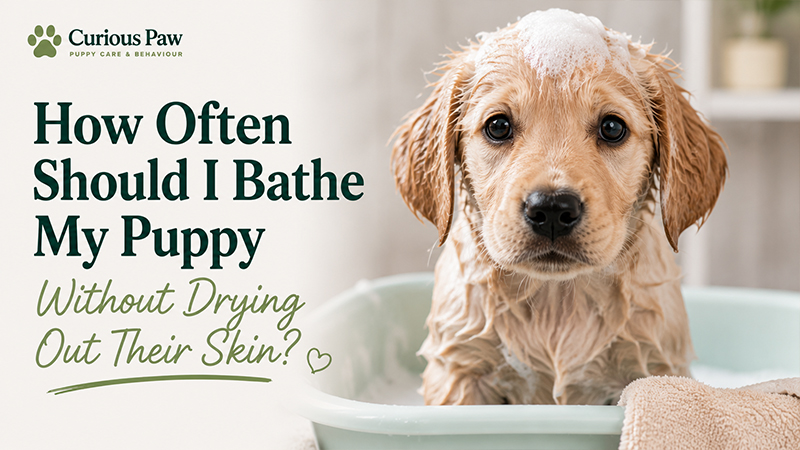
Your puppy just rolled in something at the dog park and smells like a different animal. This is bath number three this month. You’re fairly sure three is too many but you’re also fairly sure you can’t let this slide. Somewhere between keeping the puppy clean and not stripping their skin of whatever it’s supposed to have, there’s a reasonable frequency — and finding it is less complicated than it sounds once you understand what bathing actually does to puppy skin.
Why Frequency Matters
Dog skin produces natural oils — sebum — that serve real protective functions. They nourish the hair follicle, maintain the skin’s moisture barrier, and provide a layer of defense against the bacteria, yeast, and fungal organisms that cause itching and infection. Shampoo strips some of these oils away. That’s unavoidable and it’s fine when bathing is infrequent enough for the skin to replenish the oils between sessions. The problem develops when baths happen so regularly that the skin never catches up.
Puppy skin is more sensitive than adult skin. The sebum production system is still developing, which means puppies recover from oil-stripping more slowly than adult dogs do. According to Dogster, this is why once a month is the typical recommendation for puppies — frequent enough to keep the coat clean and get the puppy accustomed to bathing, infrequent enough to let the skin do its job. PetMD puts the general adult dog guideline at every two to four weeks, and for puppies with sensitive skin, erring toward the longer end of that window is appropriate.
Coat Type Changes the Calculation
Breed and coat type are the most significant variables in how often any dog actually needs a bath — more than age, more than lifestyle, more than any general rule.


Short, smooth coats — Beagles, Whippets, Chihuahuas — trap little debris and need minimal bathing to stay clean. Every four to six weeks or less is typical. Double-coated breeds — Labs, German Shepherds, Huskies — hold more debris in the undercoat and may benefit from more regular bathing, though the AKC notes that water-repellent coats with a lot of natural oils should actually be bathed less frequently to preserve those oils. Long, silky coats — Yorkies, Maltese, Shih Tzus — tend to mat and collect debris faster and need attention every two to three weeks. Oily-coated breeds like Basset Hounds genuinely need more frequent washing, sometimes weekly, because the sebum production is naturally high.
The practical advice that sounds obvious but often gets missed: look at the specific puppy rather than the general breed guideline. A Golden Retriever that swims in a pond three times a week has different bathing needs than a Golden that lives primarily indoors. The coat type guideline is a starting point; what the puppy actually does is what sets the schedule.
Shampoo Matters More Than Most People Realize
Human shampoo is not appropriate for puppies. Dog skin has a different pH range than human skin — roughly 6.2 to 7.4 compared to human skin’s more acidic 4.5 to 5.5 — and human shampoo disrupts the acid mantle of dog skin, leaving it more vulnerable to bacteria and dryness. This applies even for a one-off bath. Keep a proper puppy shampoo on hand rather than reaching for whatever’s in the shower.
Gentle, tear-free formulas specifically labeled for puppies or sensitive skin are the right choice. Fragrance-free or lightly scented is better than heavily perfumed. Oatmeal-based formulas help maintain skin moisture. If a vet has recommended a medicated shampoo for a specific condition, use that as directed — not alternated with a standard shampoo, which can undermine what the medicated formula is doing.
The Option Most Owners Don’t Know About
A rinse-only bath — warm water, no shampoo at all — handles a significant portion of “needs a bath” situations without touching the oil layer. A muddy puppy that isn’t genuinely dirty in any way that requires cleansing can come out of a warm water rinse smelling fine and feeling clean, with zero skin impact. Many owners who learn this find that their actual shampoo-bath frequency drops noticeably because the majority of situations they were bathing for didn’t need shampoo in the first place — just warm water and a towel.
How to Bathe Without Drying the Skin
Water temperature matters. Lukewarm is right — not hot, which is drying and uncomfortable, and not cold, which stresses puppies and builds negative bath associations. Check the water on your wrist the same way you’d check a baby’s bath water. Apply shampoo in a small amount — less than seems necessary — and work it through the coat from skin outward rather than scrubbing in circles that tangle the hair. Rinse completely. Shampoo residue left in the coat is one of the most common causes of post-bath itching and it’s entirely avoidable: when you think you’ve rinsed enough, go another minute.
Dry thoroughly afterward. A damp puppy in a cool environment gets chilled quickly and starts associating baths with discomfort. Pat rather than rub, then finish with a blow dryer on a low, cool setting if the puppy tolerates it — high heat damages the coat and the skin. For long-coated breeds, brushing while drying prevents mats from setting in as the coat dries and is much easier than trying to work them out afterward.
Signs You’re Bathing Too Often
Persistent scratching that started after increasing bath frequency. A dull or brittle coat. Visible flaking. Skin that looks red or irritated in the days following a bath. Any of these suggests the frequency or the product needs adjustment. Reducing bathing frequency is the first thing to try before assuming it’s an underlying skin condition. If reducing frequency and switching to a gentler shampoo doesn’t improve things within a few weeks, a vet visit is worthwhile to rule out allergies or dermatitis.
Very young puppies can’t regulate body temperature effectively, and a full bath puts them at real risk of becoming dangerously cold. Under 8 weeks, spot cleaning with a warm damp cloth is appropriate. After 8 weeks, full baths are fine provided the water is lukewarm and the puppy is dried thoroughly immediately afterward.
Starting Early Makes Everything Easier Later
Puppies that experience bath time positively in the first few months are dramatically easier to bathe as adults. A 60-pound dog that panics at the sight of the tub — because early baths were cold, rushed, or handled roughly — is a genuine problem for the rest of that dog’s life. The first bath doesn’t need to produce a particularly clean puppy. It needs to be warm, brief, calm, and followed by something the puppy enjoys. The association being built matters more than the cleanliness achieved.
By six months, a puppy that’s had consistent positive bathing experiences approaches the tub without drama. Bath time becomes a routine rather than a confrontation, and the owner stops having to think about it as something to manage. That outcome is entirely built in the first few months, and the investment of doing early baths calmly and correctly is small compared to the return.