
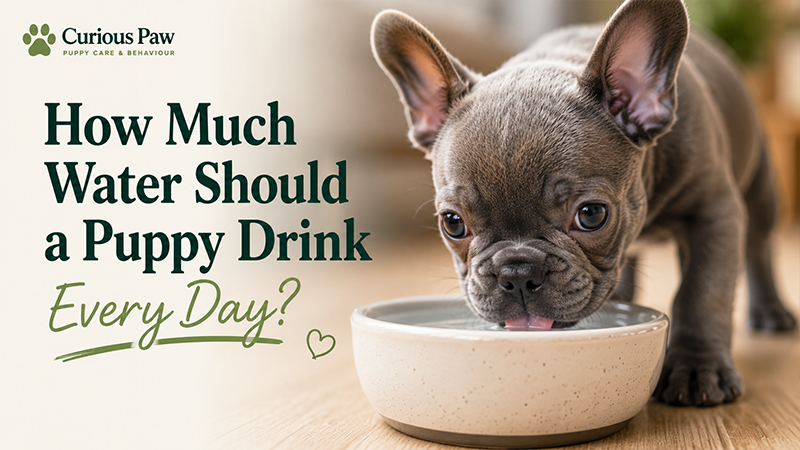
Half an ounce to one ounce of water per pound of body weight, per day. That’s the guideline from both the AKC and PetMD, and it’s the most useful number to start with. A 10-pound puppy needs roughly 5 to 10 ounces daily. A 20-pound puppy, 10 to 20 ounces. The range is wide because several factors genuinely move the number — food type, activity level, temperature, and the individual puppy’s metabolism all affect how much they actually need on any given day.
For most healthy puppies, the practical approach is simpler than tracking ounces: keep a bowl of fresh, clean water accessible at all times and let the puppy drink freely. The calculation matters more for monitoring — knowing roughly what’s normal for your puppy’s size helps you notice when intake drops or spikes in a way that might mean something.
What Changes the Number
Food type makes a bigger difference than most owners expect. Wet food contains 65 to 80 percent moisture. Dry kibble contains around 10 to 12 percent. A puppy eating exclusively wet food is getting a significant portion of their daily water through meals and will drink noticeably less from the bowl than a puppy on kibble. When owners switch from wet to dry food — or the other way around — they often interpret the change in drinking behavior as a health concern. It almost never is. It’s just the moisture math adjusting. A puppy that switches from wet food to kibble and suddenly seems to drink constantly is doing exactly what the body is supposed to do when the dietary moisture drops.
Activity and heat push intake up. A puppy that’s had an active play session on a warm afternoon needs more water than the baseline figure accounts for. This isn’t something to manage carefully — just make sure water is accessible after exercise rather than rationed.
A Quick Reference by Weight
Signs of Dehydration
Puppies dehydrate faster than adult dogs because their smaller body mass means less reserve. The skin turgor test is the standard physical check: gently pinch the skin at the back of the neck and release. In a well-hydrated puppy it snaps back immediately. In a dehydrated puppy it returns slowly or stays tented. Dry or sticky gums rather than moist and slick is another indicator. Lethargy, sunken eyes, and reduced urine output are later signs that suggest the situation has progressed beyond mild.


Dehydration in young puppies can escalate quickly. A puppy that’s vomiting or has diarrhea — both of which cause fluid loss — warrants attention even if they seem otherwise fine. If the skin turgor test shows slow return and the gums feel dry, call the vet rather than waiting to see if they improve on their own.
When a Puppy Drinks Too Much
Increased thirst that doesn’t have an obvious explanation — not hot weather, not a food change, not a particularly active day — is one of the earlier signs of several conditions. According to the AKC, excessive drinking paired with excessive urination can indicate kidney issues, diabetes, a uterine infection in unspayed females, or Cushing’s disease. These aren’t common in young puppies, but they’re not impossible.
The distinction that matters: a puppy that drinks more after exercise or on a hot afternoon is doing something normal. A puppy that visits the bowl constantly throughout the day regardless of activity, wakes in the night to drink, or seems persistently thirsty over several days is showing a pattern worth discussing with a vet.
The Bedtime Restriction
Removing the water bowl 90 minutes to two hours before bed is a reasonable housetraining strategy and it works. It reduces the likelihood of a bladder-driven wake-up in the middle of the night without depriving the puppy of hydration during the day. The key condition: the puppy needs to have been drinking normally during the day before any bedtime restriction makes sense. A puppy that hasn’t drunk enough by evening and has the bowl removed isn’t getting housetraining management — they’re just thirsty.
Some owners try to limit water intake throughout the day to reduce accidents during housetraining. This causes dehydration and doesn’t meaningfully improve training outcomes. Daytime water access should always be unrestricted. Only the bedtime restriction — roughly 90 minutes before sleep — is appropriate, and only once normal daytime hydration is established.
When to Call the Vet
A vet call is warranted if the puppy refuses water for more than 12 hours, shows signs of dehydration, is drinking dramatically more than the guideline range without an obvious reason, is vomiting or has diarrhea lasting more than 24 hours, or the urine is very dark or has an unusual smell. Young puppies have small reserves — dehydration that would be manageable in an adult dog can become serious quickly in a 10-week-old.
One thing most water-intake guides skip: the bowl itself. Plastic water bowls develop micro-scratches over time that harbor bacteria and can give the water an off-taste that some puppies detect and respond to by drinking less. Owners sometimes interpret this as a health concern when it’s just a bowl that hasn’t been washed properly or replaced. Stainless steel bowls are easier to keep genuinely clean and don’t develop the same residue problem. A puppy that seems reluctant to drink despite being otherwise healthy and active is worth a bowl swap before a vet visit.