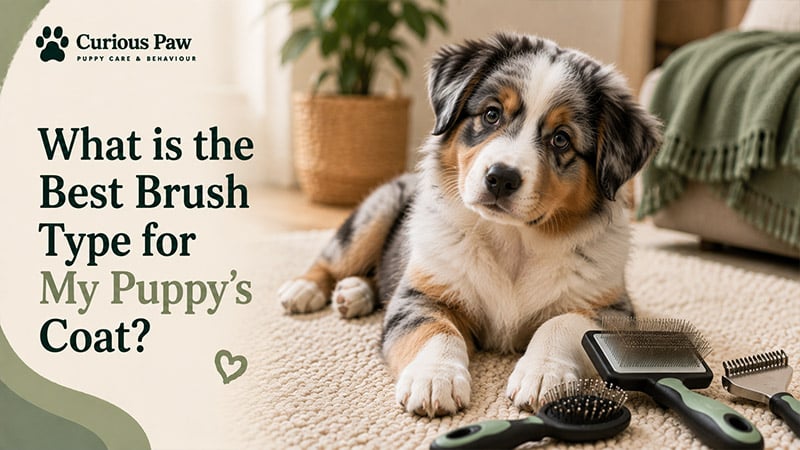
The right brush for a puppy depends on coat type, not breed name — and for puppies under 6 months, there’s a second variable that overrides breed-specific recommendations: puppy skin and puppy coats are softer and more sensitive than adult coats, which means the gentlest tool appropriate for each coat type is the right starting point, not the most effective adult-coat version. Getting this right matters because harsh tools used on young skin create the negative grooming associations that persist for years.
The Main Brush Types
Slicker brush: Fine wire pins angled to work through the coat and remove tangles, loose hair, and debris. The most versatile brush type and the most commonly recommended by professional groomers. For puppies, look for a soft slicker specifically — the pins should have some give and the tips should be rounded or coated. Standard adult slickers with stiff wires can scratch puppy skin during the learning-to-groom phase. According to VCA Mountain View’s grooming team, longer-haired breeds do well with extra-long pin slicker brushes, but the firm versions are appropriate once the adult coat arrives, not during puppyhood.
Pin brush: Looser-spaced pins with rounded tips that glide through the coat more gently than a slicker. Better for puppies with medium to long fluffy coats that aren’t heavily matted — the rounded tips massage rather than scratch. Less effective for mat removal than a slicker but more appropriate as a starting tool for puppies being introduced to brushing. A good first brush for many young puppies, upgraded to a slicker once the adult coat and adult skin have developed.
Bristle brush: Dense natural or nylon bristles that work the outer coat rather than penetrating to the skin. Effective for short, smooth coats where debris removal and oil distribution is the goal rather than tangle removal. Also useful as a finishing brush after using a slicker or pin brush on longer coats — it smooths the topcoat, distributes natural oils, and adds shine. Virtually no risk of skin scratching, which makes it the safest default brush for young puppies or for areas of sensitivity.
Rubber curry brush: A soft rubber tool with nubbins or nubs rather than pins. Primarily useful for short-coated breeds — it massages the skin, removes dead hair, and distributes oils without any risk of scratching. Often used during bathing to work shampoo through a short coat and release trapped dead hair. Many puppies, particularly those just learning to tolerate grooming, accept a rubber curry more readily than any bristled tool because it feels more like a massage.
Metal comb: Not a brush, but an essential complement to any brush. After brushing, a comb run through the coat — particularly around the ears, collar area, armpits, and between the hind legs — catches any remaining tangles that the brush missed. A tangle the brush passes over becomes a mat if left. The comb is the quality check after the brush, and for puppies prone to matting (Poodles, Doodles, Cocker Spaniels, Bichons), it’s as important as the brush itself.
By Coat Type
Short, smooth coats (Beagles, Boxers, Labrador Retrievers, Pugs, Dobermans): A rubber curry brush or soft bristle brush is all that’s needed. These coats don’t mat and the goal is removing dead hair and distributing oils. A quick once-over once or twice a week.

Medium coats (Golden Retrievers, Corgis, Australian Shepherds, Border Collies): A pin brush or soft slicker for regular brushing, a metal comb for the fringe and feathering around ears and legs where mats most commonly form. These coats benefit from brushing every few days, more during shedding seasons.
Long coats (Shih Tzus, Yorkshire Terriers, Maltese, Afghan Hounds, Collies): A pin brush or slicker brush, always working in sections from the ends upward to avoid pulling at tangles. A metal comb through every section after brushing. For puppies of long-coated breeds, a soft slicker is more appropriate than a firm one until the adult coat is established. Daily brushing is typically required to prevent mats.
Curly or wavy coats (Poodles, Doodles, Bichons, Water Spaniels): These coats mat fastest of any type — the curl texture traps shed hair against the skin rather than allowing it to fall out naturally. A slicker brush and metal comb are essential, and a Doodle or Poodle that isn’t brushed every two to three days will mat regardless of length. Puppy Doodles specifically are notorious for matting as the transition from puppy coat to adult coat happens between 6 and 18 months — this is when professional grooming becomes essential and not optional.
Double coats (Huskies, Malamutes, German Shepherds, Samoyeds, Bernese Mountain Dogs): An undercoat rake or slicker brush for the outer coat, a comb for sections, and deshedding tools once the adult double coat has fully developed. The puppy coat of these breeds is typically single and soft — the dense undercoat that requires the specialized tools arrives later.
The Deshedding Tool Question
Deshedding tools — Furminator-style blades and stripping rakes — are designed to reach into the undercoat and pull out loose dead hair. They’re effective for adult double-coated dogs during shedding season. According to VetriScience’s grooming guide, they’re too harsh for most puppy coats and puppy skin, which is softer and more sensitive than the adult coat these tools were designed for. Using a deshedding tool on a puppy before the adult coat has grown in can cause skin irritation and scratching, and produces a negative grooming experience that’s hard to undo. The time to introduce deshedding tools is when the adult coat arrives — not during the puppy months.
Finishing every brushing session with a bristle brush pass, regardless of coat type, distributes oils from the skin across the coat, smooths the topcoat, and leaves the coat in the best possible condition after the functional work is done. It’s a low-effort addition that produces a noticeably better result and a puppy that ends each session on the most pleasant sensation in the grooming process.