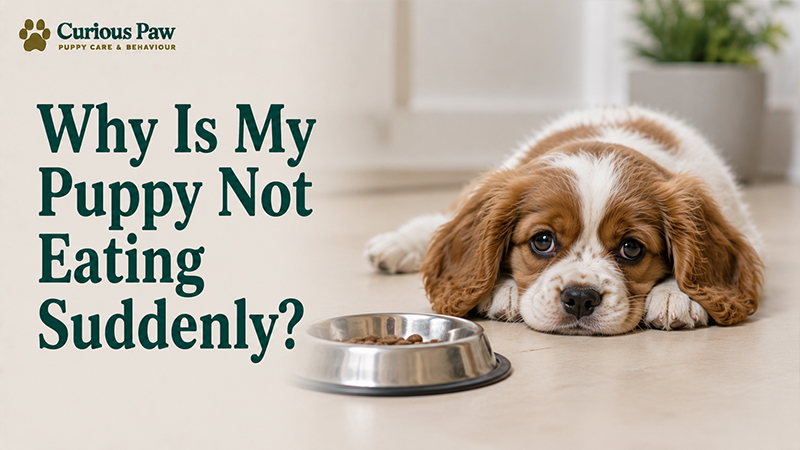
A puppy that turns away from their bowl is unsettling in a specific way that’s hard to explain to people who’ve never had one. You picked out the food carefully, you measured the right amount, you put it down at the right time — and the puppy sniffs it, walks away, and goes to sleep. The worry sets in fast. Most of the time, the cause is something manageable. But puppies cannot go as long without food as adult dogs, and the threshold for concern is shorter than many owners realize.
The First Week in a New Home
The single most common cause of a puppy not eating is stress from the transition to a new home. The move itself — leaving the litter, experiencing a car ride, arriving in an unfamiliar environment full of new smells, sounds, and people — produces a cortisol response that suppresses appetite in many puppies for the first 24 to 72 hours. Some eat enthusiastically from day one. Others take several days to settle before eating reliably. Both are within the range of normal, as long as the puppy is otherwise alert and there are no other symptoms.
Establishing a consistent feeding routine helps. Same spot, same bowl, same schedule, same food — every variable kept as predictable as possible while the puppy adjusts. Meals picked up after 20 minutes whether the puppy has eaten or not, rather than left out all day, which teaches the puppy that meals happen at specific times and food isn’t always available. Feeding in a quiet area away from household traffic removes another source of stimulation that can interfere with appetite in a newly arrived puppy.
Teething
Between roughly 12 weeks and 6 months, the teething process produces real gum discomfort that can make eating hard kibble unpleasant. A puppy that was eating enthusiastically and then shows decreased interest in food around 14 to 16 weeks, without any other symptoms, is often in the discomfort phase of early teething. Softening kibble with warm water, temporarily mixing in a small amount of wet food, or switching to a softer texture formula for the duration can reduce the discomfort enough to keep appetite stable. The change in eating behavior typically resolves as the adult teeth settle in.


After Vaccination
A reduced appetite for 24 to 48 hours following vaccination is a common and expected side effect. The immune system is responding to the vaccine — producing a mild fever, some lethargy, and reduced interest in food as a normal part of that response. Most puppies return to normal eating within two days without any intervention. Knowing this in advance prevents the post-vaccination appetite dip from becoming an unnecessary panic call. If the reduced appetite continues past 48 hours, or if it’s accompanied by vomiting, diarrhea, facial swelling, or significant lethargy, contact the vet.
The Food Problem
A sudden food change is a reliable appetite disruptor. Switching food abruptly rather than gradually over 7 to 10 days often causes digestive discomfort that reduces interest in eating. If a food switch happened recently and the puppy has become reluctant to eat, going back to the previous food or slowing the transition usually resolves it.
Stale or rancid food is worth checking. Dry kibble has a shelf life, and food left in a bag that’s been open for several weeks can develop an off smell that puppies detect and reject. Storing kibble in an airtight container extends its useful life significantly. If the food smells off to a human nose, it definitely smells off to the puppy.
Pickiness that developed gradually is usually a learned behavior rather than a food problem. A puppy that received frequent high-value food additions to kibble — a little wet food here, a bit of chicken there — learns that holding out produces something better. Returning to plain kibble, not adding anything, and picking up the bowl after 20 minutes regardless of whether the puppy ate, produces genuine hunger that resolves the pickiness over two to three meals for most puppies.
When It’s Medical
Illness of almost any kind suppresses appetite — infection, intestinal parasites, a foreign object causing partial obstruction, nausea from a developing condition. The critical question is always whether the appetite loss is accompanied by other symptoms. A puppy that isn’t eating but is otherwise alert, active, and normal in every other way is a different situation from one that isn’t eating and is also lethargic, vomiting, having diarrhea, or showing any signs of pain or distress.
According to PetMD, if a puppy is skipping meals alongside vomiting and diarrhea, the first thing to rule out is parvovirus — a life-threatening viral disease that requires emergency care. A puppy that isn’t eating plus any of those additional symptoms should see a vet immediately, not after a few more days of observation. Parvovirus moves fast, and waiting is what determines outcome.
Call immediately if: the puppy hasn’t eaten for more than 24 hours (12 hours for toy breeds and puppies under 12 weeks), appetite loss is accompanied by vomiting, diarrhea, lethargy, or visible distress, the puppy appears to be in pain, or there’s been a sudden and complete refusal to eat in a puppy that was previously eating well with no obvious environmental change.
Puppies cannot safely go as long without food as adult dogs. Hypoglycemia — dangerously low blood sugar — is a real risk in small breeds and very young puppies, and it can develop faster than owners expect.
Things That Sometimes Help
Warming kibble slightly with warm water or low-sodium broth can make it more aromatic and appealing without changing the nutritional content significantly. Adding a small amount of wet food as a topper — not as the main event — can bridge a period of reduced appetite. Hand-feeding individual pieces gives some puppies the engagement they need to start eating in a new or stressful situation, though it shouldn’t become a permanent requirement. A brief walk before a meal can stimulate appetite through activity.
None of these strategies apply if the appetite loss is medical. A puppy that needs a vet doesn’t need a food topper. Ruling out illness first, particularly when the puppy is young or showing any other symptoms at all, is the right sequence.
Frequently Asked Questions
How long can a puppy go without eating before it’s an emergency?
As a general guideline, a puppy that hasn’t eaten for more than 24 hours should be seen by a vet. For toy breeds and puppies under 12 weeks, that threshold is 12 hours — hypoglycemia can develop quickly in small or very young puppies. These thresholds shorten significantly if there are any accompanying symptoms like vomiting, diarrhea, lethargy, or visible distress, in which case a vet should be contacted immediately rather than waiting.
My puppy eats some food but not all of it — is that a problem?
Not necessarily. Feeding guides on packaging are averages, and many healthy puppies eat 60 to 70 percent of the recommended amount consistently. If the puppy is maintaining healthy weight, has normal energy, and normal stool, eating less than the guide suggests isn’t automatically a concern. The signal to watch is a change from the puppy’s own normal — a puppy that was eating reliably and suddenly eating much less, or nothing, is worth investigating even if the amount they were eating before seemed low.
My puppy stopped eating after getting shots — is that normal?
Yes. A reduced appetite for 24 to 48 hours after vaccination is a common and expected side effect of the immune response. Most puppies return to normal eating within two days without any intervention. If the appetite loss continues past 48 hours, or is accompanied by vomiting, diarrhea, facial swelling, or significant weakness, contact your vet — those go beyond the expected mild post-vaccination response.
For most puppies, a skipped meal or two has a benign explanation. For young puppies especially, the margin for waiting is shorter than owners often assume. When in doubt and the puppy is under 12 weeks, a call to the vet is always the right move — not something to feel embarrassed about.