
Most owners think of early puppy travel as something to get through — the drive home from the breeder, the vet appointment in the first week, the unavoidable trips before the puppy is old enough to enjoy going places. The reframe that changes the whole approach: puppyhood is actually the best window to build a dog that travels well for life. Puppies are neurologically more flexible than adult dogs. Novel experiences during the socialization window — including car rides, carriers, different environments, and travel routines — get processed and filed as normal faster than they would at any later point. The dog that becomes a genuinely calm traveler almost always built that relationship with vehicles and carriers during puppyhood. It’s not a personality trait — it’s a product of early experience.
Car Travel: What Actually Matters for Safety
An unrestrained puppy in a moving car is a safety risk for the puppy and for everyone in the vehicle. A puppy that can roam the back seat, climb into the front, or startle at a sound and end up underfoot is a distraction. According to PetMD, restraint in a vehicle means either a secured crate that can’t slide or tip, or a crash-tested safety harness specifically designed for vehicle use. A regular harness clipped to a seat belt isn’t the same thing — it’s not designed to distribute the forces of a collision and can cause injury in one. The restraint matters more than owners typically think until they’ve been in a sudden stop with an unrestrained dog.
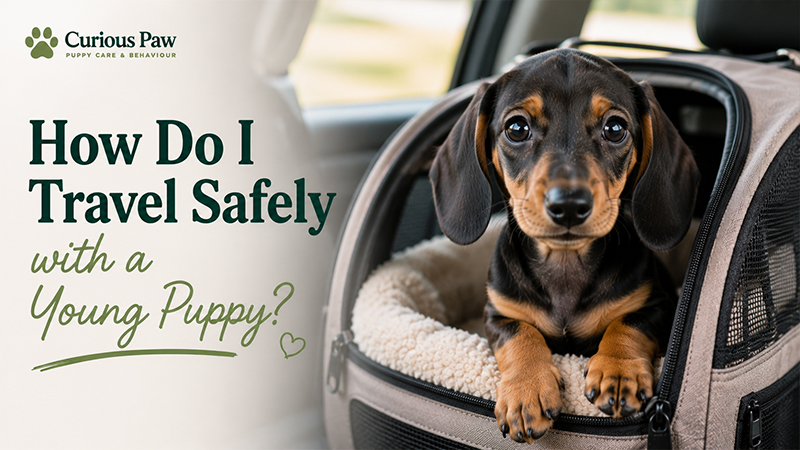
For most young puppies, a carrier or crate secured so it can’t move is the most practical option. It keeps the puppy contained, comfortable, and visible. Some owners prefer a back-seat divider that gives the puppy the full rear area — this works adequately for moderate trips but doesn’t provide equivalent protection in a serious accident.
Motion Sickness Is Common and Fixable
The vestibular system — the inner ear balance mechanism — isn’t fully developed in young puppies, which is why motion sickness is significantly more common in puppies than adult dogs. The sensory mismatch of movement without visual reference produces nausea through the same mechanism it does in humans. Signs: excessive drooling, yawning, lip licking, whining, and vomiting. The priority, according to PetMD, is preventing negative associations with car rides — a puppy that gets nauseated repeatedly in cars becomes anxious about cars, which compounds into a separate behavioral problem on top of the physical one.


Practical steps that help: don’t feed within two to three hours of travel, keep the car cool with good airflow, orient the carrier so the puppy faces forward if possible, and keep early trips short. Most puppies outgrow motion sickness as the vestibular system matures. If it’s significant and affecting the puppy’s ability to travel at all, a vet visit is worthwhile — there are safe medications specifically for travel-related nausea in dogs that make the transition period significantly more manageable.
The Drive Home Set a Tone — and It’s Fixable
The drive home from the breeder or shelter is almost always overwhelming for a puppy. Separated from their littermates for the first time, in a strange carrier, in a moving vehicle, often with people they don’t know yet — it’s the highest-stress introduction to car travel possible. That’s unavoidable. What isn’t unavoidable is letting that first experience become the puppy’s fixed reference point for what car rides mean.
In the days immediately after coming home, intentional short positive trips make a genuine difference. Not grocery runs where the puppy sits alone in the car — actual trips that start and end positively. Engine on, parked, treats, calm. Then around the block and back. Then a five-minute drive to somewhere pleasant. Each positive experience layers over the first difficult one and begins shifting the association. Owners who skip this step because the puppy “seems fine” often discover six months later that they have a dog that pants and drools the moment the car starts moving.
On Longer Road Trips
Breaks every one to two hours for bathroom opportunities, water, and brief movement. Young puppies can’t hold their bladder for a four-hour stretch in a carrier, and expecting them to is both uncomfortable and sets housetraining back. Plan the route with stops that have space for a leash walk — not a highway shoulder, but a grassy rest area or parking lot edge where the puppy can actually go.
Don’t feed a full meal right before or during travel. A light meal three to four hours before departure works. Small amounts of water during breaks rather than a full bowl that sloshes around between stops. Pack the puppy’s own food — even if the trip is short enough that they won’t need it en route, sudden dietary changes from eating whatever’s available at the destination can cause stomach upset at the worst possible time.
One person stays with the puppy any time the car is parked. This is the parked car rule that applies year-round: a car parked in mild 65°F weather reaches 90°F inside within 20 minutes. A puppy’s temperature regulation is poor enough that this window is genuinely dangerous. There’s no safe duration for a puppy unattended in a parked vehicle — not for a quick coffee, not while someone pays for fuel.
Flying With a Puppy
Most airlines require puppies to be at least 8 weeks old to fly. Health certificates dated within 10 days of departure are standard requirements — check the specific airline’s current policy before booking, as these vary and change. Cabin travel, where the puppy fits in an airline-approved soft carrier under the seat in front, is significantly safer and less stressful than cargo. The carrier dimensions are specific to the airline and often to the aircraft type, which makes buying a carrier before confirming airline measurements a mistake that’s difficult to fix at the airport.
Cargo hold travel is cold, dark, noisy, and disorienting even for adult dogs. For a young puppy, it’s a significant stressor and should be avoided when any cabin option exists. Most veterinary organizations including the ASPCA advise against sedation for flying — sedated dogs can’t regulate balance and temperature effectively, which increases risk particularly in cargo. If a puppy is anxious about flying, discuss alternatives with a vet rather than defaulting to sedation.
At the Destination
Bring the crate. A familiar crate in an unfamiliar place settles a puppy faster than any other arrangement — it’s the one consistent sensory environment in a changed landscape of new smells, sounds, and surfaces. Puppies that travel badly at destinations almost always do so because the sleep and routine disruption compounds the novelty of the environment. The crate is the anchor.
Puppy-proof the accommodation on arrival before giving the puppy free access. Hotels, vacation rentals, and family homes all have different hazard profiles from your own home — unfamiliar low cabinets, different trash cans, potential toxins from previous occupants, unfenced outdoor areas. A quick walk-through at floor level, applying the same attention as home puppy-proofing, catches most issues before they become problems.
Most owners discover on their first trip that the puppy adapts faster than expected — and that the crate, the familiar food, and the consistent routine were what made the difference, not anything elaborate. The preparation feels like a lot before the first trip and becomes automatic by the third.