
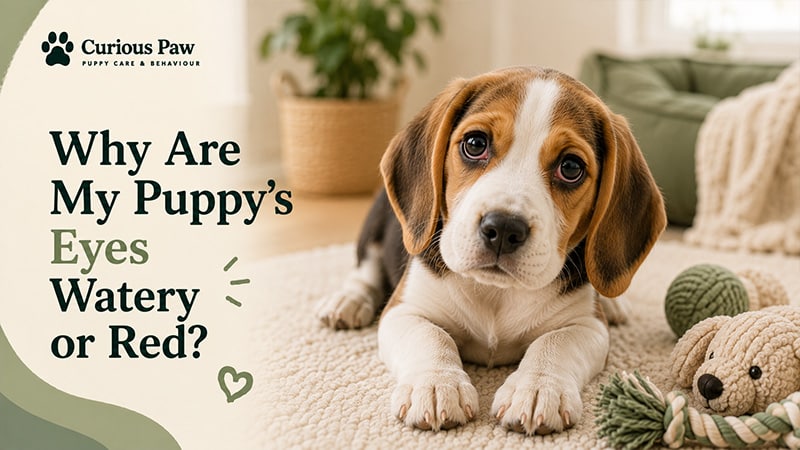
The color of the discharge and whether it’s in one eye or both narrows the cause significantly before you know anything else. Clear and watery in one eye after being outdoors: likely a temporary irritant. Yellow-green discharge, persistent redness, or a puppy squinting at the light: needs veterinary evaluation. Understanding the difference between “watch for a day” and “call today” is most of what this question is actually asking.
One Eye or Both Eyes — the First Distinction
According to AKC Chief Veterinary Officer Dr. Jerry Klein, if only one eye is affected, the cause is likely local — infection, inflammation, a structural issue, or a foreign body in that specific eye. Because allergic responses are systemic, they typically affect both eyes simultaneously. This isn’t an absolute rule, but it’s a useful starting observation before calling the vet. A puppy with one red, discharging eye has a different probable cause than one with both eyes watering.
What the Discharge Looks Like Matters
Clear and watery discharge is the least alarming. It can come from a temporary irritant — wind, dust, pollen, a face full of grass — and may resolve on its own within a day. A small amount of crusty discharge in the inner corner of the eye after waking is normal in many puppies and not a sign of infection. If the clear discharge persists beyond a day without improvement, or if it’s accompanied by redness or squinting, a vet call is appropriate.


Cloudy, mucusy, yellow, or yellow-green discharge indicates infection or more significant inflammation. According to VCA Animal Hospitals, yellow-green or pus-like discharge points to bacterial involvement and generally requires antibiotic eye drops or ointment. This doesn’t mean the situation is an emergency, but it does mean home management isn’t appropriate — using the wrong treatment for an eye condition can worsen the underlying problem, and getting an accurate diagnosis matters.
Conjunctivitis
Conjunctivitis — inflammation of the conjunctiva, the moist tissue lining the eye and inner eyelids — is the most common cause of eye redness and discharge in puppies. PetMD notes it’s more common in puppies, young adults, and seniors than in adult dogs in their prime, likely due to immune system factors. It can be triggered by bacterial or viral infection, allergens, foreign material, trauma, or structural abnormalities. The signs: red, swollen eyelid tissue, discharge ranging from watery to purulent, squinting, excessive blinking, and sometimes pawing at the eye.
Conjunctivitis in puppies can also accompany upper respiratory infections — if the watery eyes are alongside coughing, nasal discharge, or lethargy, an infectious cause is more likely than a local eye issue. Canine distemper specifically can produce eye discharge alongside other systemic symptoms, which is why vaccination history matters when assessing a puppy with eye symptoms.
Cherry Eye
Cherry eye is the colloquial name for prolapsed nictitans gland — when the small tear-producing gland inside the dog’s third eyelid protrudes and becomes visible as a red, rounded mass in the inner corner of the eye. It looks alarming because it appears suddenly and is visually distinctive, but it’s not immediately painful in most cases. It’s most common in young dogs of predisposed breeds: Bulldogs, Cocker Spaniels, Beagles, Boston Terriers, Lhasa Apsos, and some giant breeds.
Cherry eye requires veterinary treatment, typically surgical repositioning rather than removal — the gland produces a significant portion of the eye’s tear film, and removing it permanently increases the risk of dry eye. Anti-inflammatory drops can reduce swelling temporarily and may resolve very mild cases, but most require surgical correction. A puppy with a red mass in the inner corner of the eye that appeared suddenly should see a vet within a few days, not urgently unless there are other signs of distress.
Structural Causes in Predisposed Breeds
Several structural conditions cause chronic eye irritation and tearing, and they’re more common in specific breeds. Entropion — the inward rolling of the eyelid so that lashes rub against the cornea — causes persistent redness, squinting, and tearing, and requires corrective surgery. It’s common in Shar-Peis, Chow Chows, Bulldogs, and some other breeds. Excessive facial skin folds in brachycephalic breeds (Pugs, French Bulldogs, Boxers) can also rub against the eyes and produce chronic discharge. Distichiasis — extra eyelashes growing from abnormal positions — is another structural cause of tearing.
Tear staining — the reddish-brown discoloration around the eyes, particularly visible in light-coated breeds — is a cosmetic result of excessive tearing rather than a disease itself. The staining comes from porphyrins in tears reacting to air. It can be reduced with consistent cleaning but isn’t harmful unless the underlying cause of the excessive tearing (blocked tear ducts, structural issue, chronic irritation) is left unaddressed.
When It’s Urgent
A puppy actively pawing at one or both eyes, especially after an outdoor injury or while something may be stuck in the eye, is an emergency or at minimum same-day care. A corneal scratch or foreign body can progress quickly and is intensely painful. Signs of eye pain: squinting, holding the eye shut, pawing, sensitivity to light, visible cloudiness or change in the eye surface. Pale, cloudy, or bluish appearance over the eye (possible corneal ulcer or glaucoma), sudden vision changes or walking into things, and obvious trauma to the eye area all warrant same-day veterinary care.
Human eye drops — including Visine and other over-the-counter products — are not safe for dogs and can worsen eye conditions or cause chemical burns to the cornea. Saline eye wash made for pets or plain sterile saline can be used to gently flush visible debris from a puppy’s eye, but any persistent redness, discharge, or discomfort needs veterinary diagnosis before any medicated product is used.
Frequently Asked Questions
My puppy has goop in their eye every morning — is that normal?
A small amount of dried discharge in the inner corner of the eye after sleeping is common in many puppies and not necessarily a sign of infection. It’s similar to the “sleep” humans get overnight. Clean it gently with a damp cloth. If the discharge is yellow, green, or consistently present throughout the day alongside redness or squinting, that’s beyond normal and warrants a vet call.
What is cherry eye and does it need surgery?
Cherry eye is a prolapsed gland in the third eyelid that appears as a red, rounded mass in the inner corner of the eye. Most cases require surgical repositioning — not removal — because the gland produces part of the tear film and removing it increases the risk of dry eye later in life. Anti-inflammatory drops may reduce inflammation temporarily, but they rarely resolve the prolapse permanently. A vet visit within a few days is appropriate.
Can I use human eye drops to clean my puppy’s eyes?
No. Human eye drops, including Visine and artificial tears designed for humans, are not safe for dogs and can cause harm. Plain sterile saline or a veterinary-formulated eye wash can be used to gently flush debris from the eye surface. Anything medicated — drops, ointments, or treatments — needs to be specifically prescribed or recommended for dogs by a veterinarian, as some human ophthalmic medications are damaging to the canine eye.
Eye symptoms in puppies that are mild, transient, and have a clear environmental explanation can often be monitored briefly. Anything persistent, worsening, or affecting the puppy’s comfort and behavior needs a vet. Eyes are one of the body systems where small problems can become serious quickly — a 24-hour wait is usually fine; a week of hoping it resolves isn’t.