
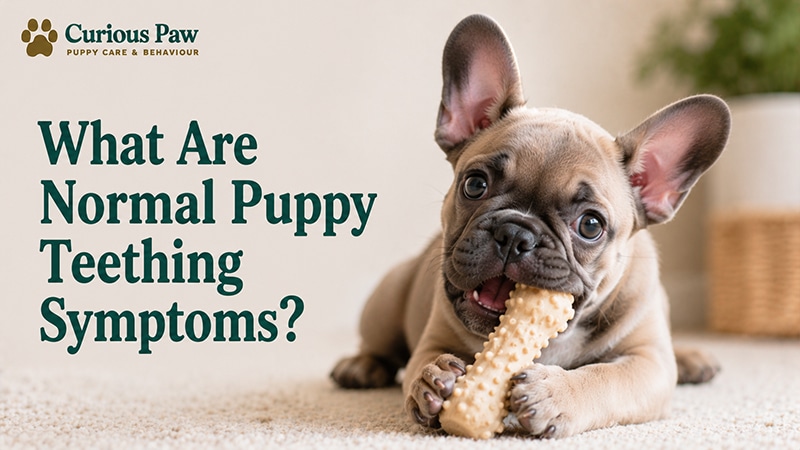
Puppies teethe twice. Most owners know about the second phase — the one that starts around 12 weeks when the destruction of household objects escalates and the puppy suddenly seems to have a mouth full of everything. What owners often don’t realize is that the first set of teeth came in during the weeks before the puppy came home, and by the time the puppy arrives at 8 weeks, that first set is already in. The second phase — when 28 baby teeth are pushed out and replaced by 42 adult teeth — is the one most people live through.
The Timeline
Baby teeth start erupting around 2 to 4 weeks of age. By 5 to 6 weeks, all 28 baby teeth are typically in. From around 12 to 16 weeks, the baby teeth begin to fall out as adult teeth push up beneath them. By 6 months, most puppies have their full set of 42 adult teeth. Small breeds may take slightly longer — sometimes up to 8 months — and if any baby teeth are still present past that point, a vet should check whether they’re retained teeth that need extraction.
The active discomfort phase — when the gums are sore and the puppy is chewing to relieve pressure — runs roughly from 12 weeks to 6 months. The peak is typically between 3 and 5 months, when the larger adult teeth are pushing through. This is also the phase that produces the most chewing-related damage to household items, which isn’t coincidental.
Normal Teething Symptoms
Chewing on everything is the most visible sign. The puppy is seeking pressure on the gum line to relieve inflammation, and they’ll apply this instinct to whatever is available — shoes, furniture, hands, fabric, electrical cords. This is why access management matters more during the teething phase than at any other time: the drive to chew is physiologically driven, not behavioral, and it can’t be trained away. It can only be redirected.


Increased drooling is common. The gum irritation stimulates saliva production, and some puppies drool noticeably more than usual during peak teething. Mild swelling and redness of the gums is normal — the tissue is actively being pushed by new tooth roots. A small amount of blood on a chew toy or a bloody mark on something the puppy has been chewing is also normal and not a reason to panic.
Finding a tooth. Owners who find a tiny tooth on the floor — a sharp, surprisingly small white sliver — are usually confused at first. Puppies routinely swallow their shed baby teeth during eating or chewing, but some fall out and turn up in the house. Occasionally there’s a tiny spot of blood where the tooth was. Both are normal. The tooth is gone, a new one is coming, and the puppy almost certainly didn’t notice.
Mildly reduced appetite during peak teething is common. Gum soreness can make eating hard kibble uncomfortable enough that a puppy eats less at a meal or seems pickier than usual. Softening kibble with warm water temporarily tends to resolve this. If the appetite change is significant — the puppy is refusing food consistently or losing weight — it’s worth a vet call.
Increased biting is the behavioral sign most new owners struggle with the most. The puppy is not being aggressive — they’re mouthy because their gums hurt and pressure helps. But this is also the period when bite inhibition is most critically trained, because the adult teeth coming in are much stronger. The urgency to redirect and manage mouthing during this phase, not after it, shapes how the adult dog interacts physically with people.
What Actually Helps
Cold and frozen options work best for gum inflammation. A Kong stuffed and frozen overnight, a frozen carrot (plain, unseasoned), a damp rope toy left in the freezer — the cold reduces inflammation and the texture provides chewing engagement. Room-temperature chew toys help too, but the frozen versions produce noticeably more relief during the peak discomfort weeks.
According to VCA Animal Hospitals, the hardness of a chew toy matters during teething. Baby teeth and newly erupted adult teeth are softer than mature adult teeth, and hard objects can fracture them. The thumbnail test applies: press a thumbnail firmly into the material. If it leaves no indent, the toy is too hard for a teething puppy. Nylon bones, antlers, real bones, and hard rubber toys designed for adult dogs can all cause tooth fractures at this stage. Softer rubber options and food-based chews are safer.
If a baby tooth is still in place when the adult tooth has erupted beside it, the baby tooth is retained. This is most common in toy and small breeds and most frequently affects the canine teeth. A retained baby tooth causes the adult tooth to erupt in the wrong position, creates a food trap between the two teeth that produces rapid plaque buildup and gum disease, and should be extracted. If you notice two teeth in the same socket position, mention it to the vet at the next appointment. It won’t resolve on its own.
When to Call the Vet
Significant swelling, heavy bleeding, apparent pain severe enough to interfere with eating or sleep, and any retained teeth still visible past 6 to 8 months are all reasons to contact the vet. The teething process itself is not a medical event requiring veterinary management in most puppies — it’s a developmental phase that runs its course. What’s worth veterinary attention is anything that departs significantly from the normal range.
Once the adult teeth are fully in — usually by 6 months — is an ideal time to establish dental care habits. Brushing a dog’s teeth daily, starting when the adult teeth first appear, builds a tolerance for handling that makes lifetime dental care manageable. A dog that has never had its teeth brushed and is presented with a toothbrush at age 5 is a significantly harder project than a puppy introduced to it gradually at 5 months. Dental disease affects the majority of dogs over 3 years old and is one of the most preventable conditions in veterinary medicine. The teething phase, for all its chaos, is the most practical window to build the habits that prevent it.