
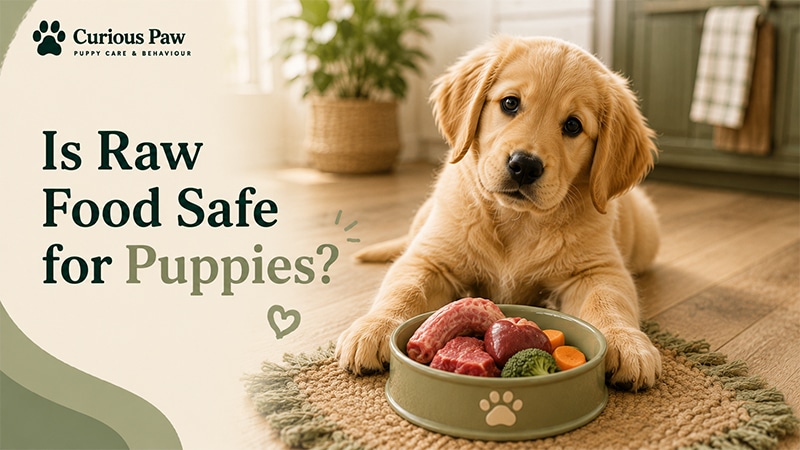
The online conversation about raw feeding often sounds more evenly divided than the institutional consensus actually is. The AVMA, FDA, CDC, AAHA, and CVMA — the major veterinary and public health organizations — all discourage raw diets for dogs, with particular concern for puppies and immunocompromised animals. That’s a more unified position than most topics in veterinary nutrition. The reasons aren’t mysterious: raw meat carries measurable bacterial contamination, homemade raw diets are frequently nutritionally incomplete, and the claimed benefits lack the scientific evidence that the risks don’t. For puppies specifically, both concerns are amplified.
The Bacterial Risk
A two-year FDA study testing over 1,000 pet food varieties found Salmonella in 15 of 196 commercially available raw foods, and Listeria monocytogenes in 32. Of the approximately 800 non-raw products tested, only one contained these pathogens. That’s a meaningful difference in contamination rate. Salmonella and Listeria in a puppy’s food supply don’t necessarily make the puppy visibly ill — dogs can shed these pathogens while appearing healthy — but they contaminate the environment and create genuine risk for humans who handle the food or come into contact with the dog’s feces, food bowl, or feeding area. The risk isn’t theoretical: according to the CDC, Salmonella infections in humans have been traced to raw pet food handling.
Puppies are specifically identified as higher-risk animals in AVMA guidance, alongside immunocompromised animals, very old dogs, and those undergoing chemotherapy. A puppy’s immune system is immature. Their ability to clear pathogenic bacterial loads without becoming clinically ill is less robust than an adult dog’s. This is the same reason puppies are more vulnerable to parvovirus and kennel cough — the same immune immaturity that makes the vaccination window so critical also makes them more susceptible to foodborne pathogens.
The Nutritional Balance Problem
Multiple studies analyzing homemade raw diets have found that the majority are nutritionally incomplete or imbalanced. Research published in the Journal of Nutritional Science found that most homemade raw recipes fail to meet established nutrient guidelines for dogs. The calcium and phosphorus balance is a particular concern for puppies: too little calcium relative to phosphorus during growth produces metabolic bone disease; too much can cause skeletal abnormalities. Both directions of imbalance cause lasting damage in a growing puppy that an adult dog can better tolerate.

The AVMA’s position is explicit: “There are many anecdotal reports of benefits associated with feeding raw food — including easier weight management, reduced dental disease, healthier coat and skin, elimination of allergies, improved overall health and immunity — but there is no scientific evidence to support these claims.” The anecdotal benefits are real experiences owners are having and reporting in good faith. The lack of controlled research evidence distinguishing those outcomes from other variables is also real. Both things are true.
Commercial vs Homemade Raw
Commercially produced raw diets that have been formulated by veterinary nutritionists and carry an AAFCO statement of nutritional adequacy are a meaningfully different product from homemade raw diets assembled from market ingredients. The AAFCO statement indicates the food meets minimum nutritional requirements for the stated life stage — including growth, which is the category that applies to puppies. A raw food with AAFCO complete and balanced certification for growth has cleared a nutritional bar that most homemade raw diets don’t reach.
The bacterial contamination risk exists in commercial raw as well as homemade — the FDA study covered commercial products — but commercial manufacturers with established quality control processes and testing protocols reduce that risk relative to home preparation. High-pressure pasteurization (HPP) is a pathogen-reduction technique some commercial raw manufacturers use that significantly reduces bacterial load without cooking the food. It doesn’t eliminate contamination risk entirely, but it reduces it.
The Human Health Consideration
A household with children under 5, elderly adults, pregnant individuals, or immunocompromised people faces a meaningfully elevated risk from raw pet food — not just from the dog eating it, but from the preparation surfaces, food bowls, storage containers, and the dog’s mouth and feces. Salmonella and Listeria survive on surfaces. A puppy fed raw food and then licking a toddler’s face is a transmission vector. This isn’t speculative: it’s the reason the CDC includes raw pet food handling in their food safety guidance alongside raw meat handling for human consumption.
If You’re Decided on Raw Feeding
Some owners choose raw feeding despite institutional guidance, and that’s a decision owners make. The practices that reduce risk if that’s the path: choose a commercial product with AAFCO complete and balanced certification specifically for the growth life stage — not adult maintenance — with a verifiable quality control process. Consult a board-certified veterinary nutritionist if formulating a diet at home; this is not optional, because the calcium/phosphorus balance issue causes irreversible skeletal damage during growth if it’s wrong. Tell the vet the puppy is on raw food so they can factor it into health monitoring. Practice strict hygiene around food preparation and the dog’s feeding area. Don’t feed raw food to a puppy in a household with immunocompromised individuals.
The mainstream veterinary recommendation for puppies is a commercially prepared, AAFCO-certified kibble or wet food formulated for growth. The evidence for its safety and nutritional adequacy is substantially more established than for raw diets. For a puppy whose immune system is still developing, that evidence base matters.
- American Veterinary Medical Association — Raw or Undercooked Animal-Source Protein in Cat and Dog Diets
- FDA — Get the Facts! Raw Pet Food Diets Can Be Dangerous to You and Your Pet
- Canadian Veterinary Medical Association — Safety of Raw Meat-Based Pet Food Products