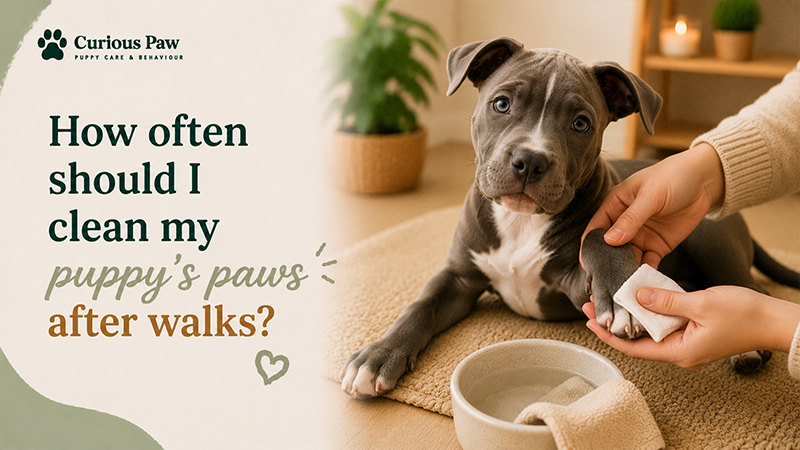
There’s no fixed schedule that applies to every puppy. According to Hill’s Pet, there aren’t specific guidelines for how often to clean a dog’s paws — the right frequency depends on activity level and season. A puppy on light neighborhood walks in dry weather needs less frequent cleaning than one hiking muddy trails or walking on salted winter sidewalks. The one piece of guidance that holds across conditions: a quick wipe after every walk, even if it’s just a once-over with a damp cloth or pet-safe wipe, prevents most paw-related issues and takes under a minute.
Why It Matters Beyond the Floors
The obvious reason to clean paws is keeping mud and debris off the floors. The less obvious reason is more relevant to the puppy’s health: dogs groom themselves by licking their paws as a normal, frequent behavior, and whatever is on the paw gets ingested in the process. A puppy that walked through a recently treated lawn, a patch of de-icing salt, or an area with pesticide residue carries those substances on its paws and then licks them off within the hour. The paw cleaning step isn’t just about hygiene for the house — it’s removing something the puppy would otherwise eat.
This matters more for puppies specifically because their immune and detoxification systems are still developing, and their smaller body size means a given quantity of an ingested substance has a proportionally larger effect than the same amount would in an adult dog.
Setting the Right Frequency
A wipe-down after every walk is the consistent minimum recommended by veterinary and grooming sources. Beyond that baseline, the frequency scales with conditions: after rain or snow, after visible mud or standing water contact, after any area known to have been treated with pesticide or fertilizer, and during winter in any region using road salt or ice-melt chemicals. A puppy walking primarily on dry sidewalks in mild weather may genuinely need nothing beyond the basic wipe; a puppy hiking wooded trails regularly needs a more thorough check and clean after every outing, including parting the toes to look for debris, ticks, or small cuts.


A weekly more thorough paw check — beyond the daily wipe — is a reasonable baseline regardless of activity level. This is the opportunity to check nail length, look for cracking or roughness in the pads, part the fur between the toes for matting or trapped debris, and notice anything that warrants a vet visit before it becomes a bigger problem.
What to Use
A damp cloth or dog-specific paw wipe handles routine cleaning. Avoid baby wipes — they often contain alcohol and fragrance that can irritate paw pads and aren’t safe if licked, which they will be. For light dirt, a soft, clean cloth soaked in lukewarm water, wiping gently and getting between the toes, is sufficient. For something stickier or smellier, a couple of drops of mild dog shampoo on the cloth before wiping handles it without requiring a full bath.
For genuinely dirty paws — deep mud, accumulated debris — a full paw soak or rinse under a faucet is more effective than wiping. Always dry thoroughly afterward; damp paws left undried, particularly between the pads and toes, create the moist environment where yeast and bacteria thrive. The drying step is not optional, especially for puppies with hair between the pads that holds moisture.
Building the Habit Early
Puppies that aren’t accustomed to having their paws handled may resist cleaning at first. Starting the habit during puppyhood — gently touching and holding paws during calm moments, unrelated to any cleaning task, paired with treats — builds the tolerance that makes the post-walk routine manageable for the rest of the dog’s life. A puppy introduced to paw handling gradually accepts the actual cleaning process far more easily than one whose first experience of paw handling is a stranger trying to wipe mud off a squirming foot.
The post-walk wipe-down, done consistently from the start, becomes a routine the puppy expects rather than resists — and it doubles as a daily body check that catches small cuts, embedded debris, or early signs of irritation before they become bigger problems. The minute it takes is a reasonable investment against what it prevents.